
System Architecture Modeling Services
SysMathx provides advanced system architecture modeling services that transform complex engineering systems into structured architectural models, combining functional decomposition, interface design, and behavioral analysis to deliver reliable modeling frameworks and engineering insights for design validation, architecture assessment, and system optimization, helping clients address complex system integration challenges across aerospace, defense, automotive, software engineering, and smart manufacturing.
How System Architecture Modeling Describes Complex System Structures
In real-world engineering systems, components do not work in isolation. Functions depend on interfaces to transfer information and energy, interface definitions determine how components collaborate, and component behavior feeds back into the overall system structure. Analyzing each subsystem or component separately misses these critical interactions entirely — leading to design flaws, interface mismatches, and significant risks during later integration.
- Integrated system views: Combines functional, physical, and behavioral perspectives in one model.
- Stable and adaptable analysis: Remains consistent as requirements and conditions evolve.
- Traceable decision-making: Links architectural choices directly to performance outcomes.
- Early risk identification: Detects interface issues and system conflicts before integration.
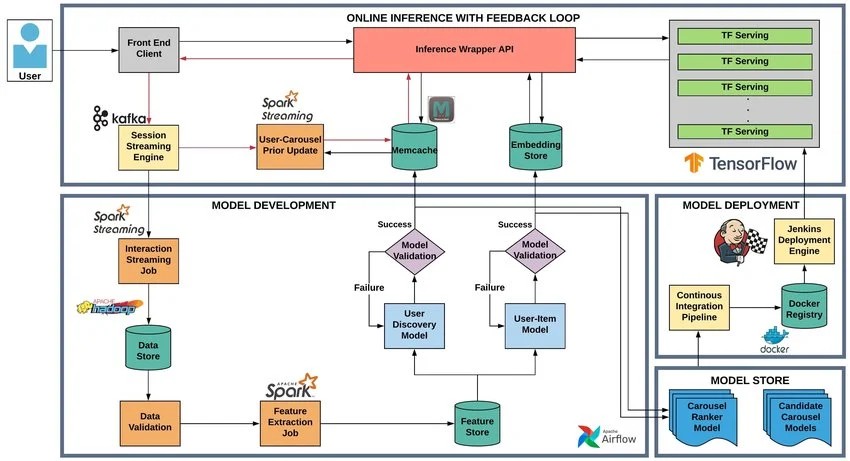 Fig.1 System architecture workflow from model development and storage to deployment and online inference. (Mantha A, et al., 2020)
SysMathx provides system architecture modeling services that help transform complex engineering problems into structured architectural models for analysis and design assessment. Our work covers component interactions and system integration — organizing problems, building model structures, and preparing frameworks that support design evaluation and decision-making.
| Services | Capabilities |
|---|---|
| Engineering Problem Structuring | We begin by organizing the engineering problem into a structured representation that reflects its functional mechanisms, constraints, and operating conditions.
|
| Model Construction & Architectural Representation | We translate functional descriptions into architectural models that can be implemented and executed within modeling environments.
|
| Architectural Analysis & Simulation Support | We support the transformation of models into executable simulation workflows using appropriate analysis strategies and computational techniques.
|
| Model Assessment & Insight Extraction | We evaluate model behavior and extract engineering insights to support design interpretation and decision-making.
|
System Architecture Modeling Methods
SysMathx provides system architecture modeling methods to structure, analyze, and manage complex systems across multiple levels of abstraction. We apply formal approaches to decompose architectures, define component interactions, and evaluate design decisions. This enables clear system organization, improved maintainability, and informed architectural evolution.
Applications of System Architecture Modeling Services
Aerospace and Defense Systems
We deploy system architecture modeling to organize the intricate structures of aircraft, satellites, and defense platforms. By mapping component interactions, this framework streamlines interface coordination, configuration management, and the overall integration of multi-domain systems.
Automotive and Intelligent Transportation
We leverage system architecture modeling to structure the intricate dependencies between vehicle control units and sensors. By facilitating functional allocation and communication design, this approach strengthens fault diagnosis and safety assurance for autonomous platforms.
Industrial Automation and Smart Manufacturing
We use system architecture modeling to coordinate devices and data flows in industrial systems such as production lines, robotics, and IoT platforms. This allows us to support integration planning, verify control logic, and design scalable system architectures.
Enterprise IT and Software Architecture
We implement system architecture modeling to map and manage the various services, databases, and applications within large-scale environments. By visualizing dependencies and data flows, this framework informs technology selection and ensures precise capacity planning.
Communication and Network Systems
We utilize system architecture modeling to structure complex 5G networks, data centers, and satellite constellations. By simulating performance and protocol verification, this framework optimizes topology design and failure recovery analysis.
Complex Products and Systems Engineering
We apply system architecture modeling to coordinate functions in engines, medical devices, and machinery. This streamlines interface standardization and function allocation, simplifying platform planning and variant management under strict constraints.
Why Choose Our System Architecture Modeling Services?
- Cross-Domain Expertise: Covers decomposition, interfaces, and integration for accurate modeling of complex systems.
- Reliable Architecture Strategies: Ensures consistent analysis across domains and abstraction levels.
- Engineering-Focused Implementation: Supports simulation, design evaluation, and decision-making in real projects.
- Scalable Modeling Capability: Adapts from conceptual to high-fidelity models across project stages.
- Insight-Driven Results: Reveals system behavior, trade-offs, and key performance drivers.
- Standard-Compliant Deliverables: Produces documentation aligned with industry and regulatory standards.
Start Your System Architecture Modeling Project!
If your project involves complex system integration or requires a structured modeling approach, our team can help define an architecture strategy suited to your needs. Share your system type, scale, constraints, and challenges with SysMathx, and we will recommend suitable architecture modeling methods and tools, or advise alternative approaches when more appropriate. Contact us to discuss your project and next steps.
FAQs
What types of systems are suitable for system architecture modeling?
Complex systems with multiple interacting components, interfaces, and functional dependencies are well suited for architectural modeling. This includes systems where integration, coordination, and cross-domain interactions are critical.
How are system boundaries and interfaces defined?
System boundaries are defined based on functional scope, operating conditions, and external interactions. Interfaces are specified through input-output relationships, ensuring clear communication between components.
Can existing system designs be incorporated into the model?
Yes, existing designs, documentation, and engineering data can be integrated into the modeling process. This helps refine the architecture and maintain consistency with current system configurations.
How is model accuracy or reliability evaluated?
Model reliability is assessed through consistency checks and sensitivity analysis across different scenarios. Comparisons between expected and simulated behavior help ensure the model reflects system logic correctly.
What outputs are generated from system architecture modeling?
Outputs include structured architectural models, interface definitions, and analysis-ready representations. These results support design evaluation, system understanding, and decision-making.
Is the model suitable for iterative design and updates?
Yes, models are built with modular structures that allow easy updates and refinement. This supports iterative development as requirements and system configurations evolve.
Reference
- Mantha A, et al. A real-time whole page personalization framework for E-commerce[C]//2020 IEEE International Conference on Big Data (Big Data). IEEE. 2020: 4646-4650.