
Grey-Box Model Identification Services
SysMathx provides grey-box model identification by combining known system structure with data-driven estimation of unknown parts. In many engineering problems, the governing equations such as ordinary differential equations (ODEs) or partial differential equations (PDEs) are partly defined, while some parameters, nonlinear terms, or boundary conditions remain uncertain. We use measurement data to estimate these unknowns while preserving the original physical structure. Our hybrid modeling services also include physics-informed neural networks for sparse data partial differential equation problems and mechanism-data fusion methods for improving existing physics models using observed deviations.
Advantages of Grey-box Modeling in Structured System Identification
In many real systems, purely data driven models ignore useful prior knowledge, while fully physics based models require all equations and parameters to be completely specified. Grey-box modeling sits between these two approaches by using a partially known structure and learning the missing parts from data while keeping the known physics intact.
- Preserve known physical laws – Fundamental rules such as conservation and balance relationships are kept in the model and are not violated during estimation.
- Learn unknown relationships – When the form of a relationship is unknown but depends on system variables, it can be estimated directly from data without assuming a fixed expression.
- Work with incomplete measurements – Unobserved states and unknown parameters can be inferred together using available data, even when measurements are sparse or noisy.
- Reduce data requirements – By keeping the known structure fixed, the model has fewer unknowns and can be trained with less data compared to fully data driven methods, improving efficiency and stability in practice.
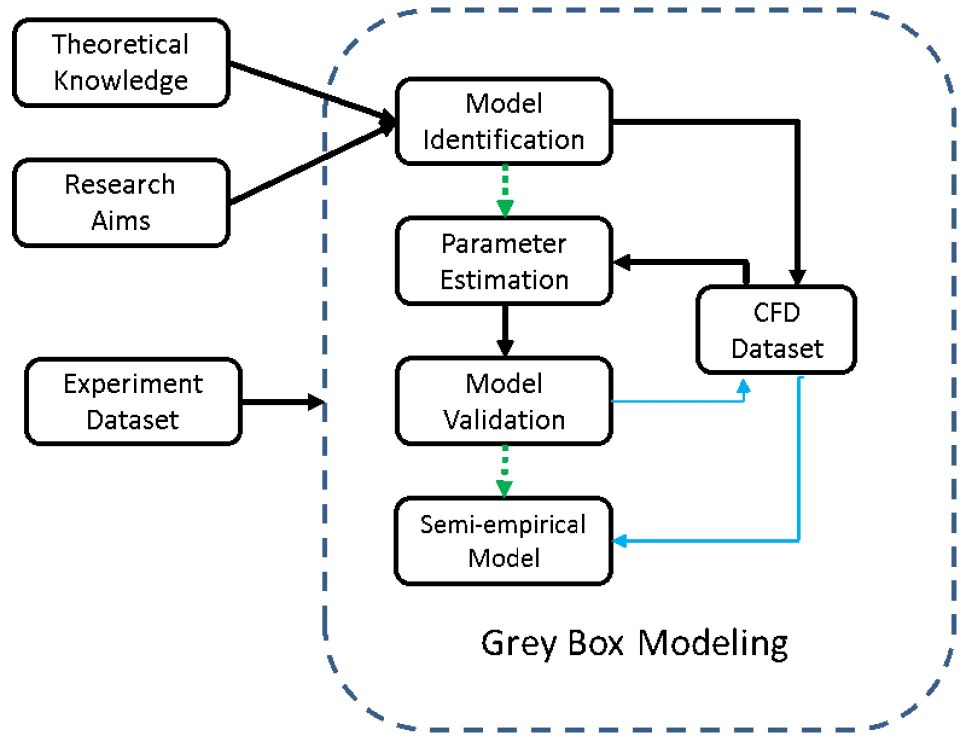 Fig.1 Grey box modeling for predicting air flow rate. (Xue P, et al., 2019)
At SysMathx, we provide grey-box identification solutions tailored to different levels of structural knowledge and data availability — from parameter estimation in known ODEs to nonparametric function estimation and partially known PDE identification.
| Services | Capabilities |
|---|---|
|
Parameter Estimation in Known ODE/PDE Structures
|
In cases where the governing ordinary differential equation or partial differential equation structure is known but certain parameters such as heat transfer coefficients, friction constants, or reaction rates are unknown, these values can be identified directly from measurement data. The approach can be used for both offline calibration and online adaptive estimation.
|
|
Nonparametric Estimation of Unknown Functions
|
When the system structure is known but specific functional relationships are unknown (e.g., friction as a function of velocity or reaction rate as a function of concentration), these functions can be learned directly from data without assuming a fixed parametric form, resulting in a grey-box representation.
|
|
Structured Nonlinear System Identification
|
Some systems have partially known structure while other components remain nonlinear and unknown, so structured identification methods are used to keep the known dynamics and learn the missing nonlinear parts from data. This is especially useful for systems operating across multiple regimes.
|
|
State and Parameter Co-Estimation
|
In many real systems, full state variables and some parameters cannot be measured directly, so they are estimated together from output data using filtering and optimization methods. This is especially important in dynamic systems where only partial and noisy observations are available, and internal states must be inferred from measured outputs.
|
Grey-box Model Identification Approaches and Computational Frameworks
Our methodology focuses on grey-box model identification by combining classical system identification with structural assumptions, statistical inference for parameter estimation, and modern simulation-based learning. The framework integrates known physical structure with data-driven components to support both parameter estimation and model reconstruction.
Applications of Grey-Box Model Identification
Grey-box identification is applied across domains where the model structure is partially known but parameters or functional relationships are uncertain — from mechanical systems and chemical reactors to biological pathways and energy systems.
Friction Identification in Servo Mechanisms
The system dynamics are described by known differential equations including inertia and applied torque, while friction depends on velocity and is unknown. It is estimated from position and current measurements without a fixed form. The resulting grey-box model improves feedforward compensation and low-speed control performance.
Chemical Reactor Kinetic Parameter Estimation
Mass balance equations are known, but reaction rate constants and Arrhenius parameters are unknown. These are estimated from concentration and temperature time-series data. The results support reliable scale-up and safety evaluation.
Battery Equivalent Circuit Model Calibration
The circuit structure is known, but component values change with state of charge and temperature. These parameters are estimated from pulse discharge and impedance measurements. The model supports estimation of charge level and health condition.
Biological Pathway Modeling
The interaction structure between components is known, while reaction laws and parameters are unknown. These are inferred from time-series measurements of concentration changes. The model helps interpret regulation mechanisms and system behavior.
Building Thermal Model Identification
The thermal network structure is known, while resistance and capacity values are unknown. These are estimated from temperature and heating or cooling data. The model supports energy efficient control of building systems.
Vehicle Lateral Dynamics Identification
The vehicle model structure is known, while cornering properties vary with tire and road conditions. These parameters are estimated from steering input and yaw rate measurements. The model supports stability control systems.
Why Choose Our Grey-Box Model Identification Services?
- Structure-preserving Approach – The known physics is kept in the model, and only the missing parts are learned from data. The final model stays close to the original equations and remains interpretable.
- Parameter Uncertainty Assessment – Estimated parameters are reported with uncertainty ranges, making it clear which values are reliable and which are less certain.
- Flexible Function Estimation – Unknown relationships are learned directly from data without assuming a fixed formula, while keeping results smooth and physically reasonable.
- Partial State Handling – Not all system states need to be measured. Unobserved states can be inferred together with unknown parameters.
- Integration with Existing Models – Existing equation-based models can be directly used, and missing components are filled in using data-driven estimation.
- Physical Consistency Checking – The final model is checked against basic physical rules such as conservation properties to ensure no obvious violations.
Start Your Grey-Box Identification Project Today!
You may already have a reliable model structure, but some parameters or functional relationships are still unknown and can be learned from data. We can support you in completing a grey-box model with quantified confidence while keeping the physical structure intact. Please share your governing equations, uncertain components, and available data, and our team will develop a suitable identification strategy for your system. If you would like to explore this further, please contact us.
FAQs
What is the difference between grey-box identification and mechanism-data fusion?
Grey-box identification usually starts from a partially defined model and learns the unknown parts from data. Mechanism-data fusion often starts from a full physics model and adds a learned correction. In practice, grey-box focuses more on the model equations, while fusion focuses more on output correction.
Can grey-box identification handle systems with time delays?
Yes. Known delays can be included directly in the model, and unknown delays can be estimated using extended model forms or by expanding the state description.
How do I know if my model structure is identifiable from data?
We assess identifiability before estimation. If some parameters cannot be uniquely determined, we may recommend additional data, simpler parameter forms, or model reformulation.
What if my known structure is partially wrong?
Grey-box methods assume the main structure is correct. If this is uncertain, a more flexible approach may be needed, and we can help evaluate the best modeling strategy.
Can the method handle noisy or incomplete measurements?
Yes. The estimation process is designed to work with imperfect data, and physical constraints help stabilize results even when measurements are limited or noisy.
Reference
- Xue P, et al. A grey box modeling method for fast predicting buoyancy-driven natural ventilation rates through multi-opening atriums. Sustainability. 2019, 11(12): 3239.