
Dynamic System Modeling Services
SysMathx provides dynamic system modeling services for engineering and scientific applications where system behavior evolves over time, combining physics-based modeling and numerical simulation to translate real-world processes into structured models for analysis, prediction, and design optimization, while integrating capabilities from differential equation modeling and multiphysics modeling services to support consistent representation of time-dependent and coupled system behavior.
How Dynamic System Modeling Works in Real Engineering Systems
Dynamic system modeling focuses on how a system evolves over time as inputs change and internal interactions take effect. Rather than looking at a single operating point, it tracks how key variables develop and influence each other under realistic conditions. This makes it particularly useful for systems with feedback, delays, or nonlinear characteristics.
In practice, this typically involves:
- State-based modeling – Defining time-varying variables such as velocity, temperature, or pressure to describe the system's condition and evolution.
- Input–output relationships – Identifying how external inputs affect system behavior and how outputs respond to those changes.
- Time-dependent simulation – Running the model across different scenarios, including step changes and continuous disturbances, to observe system responses over time.
Compared with static approaches, this type of modeling provides a clearer view of how a system behaves dynamically, helping evaluate stability, response characteristics, and overall performance across operating conditions.
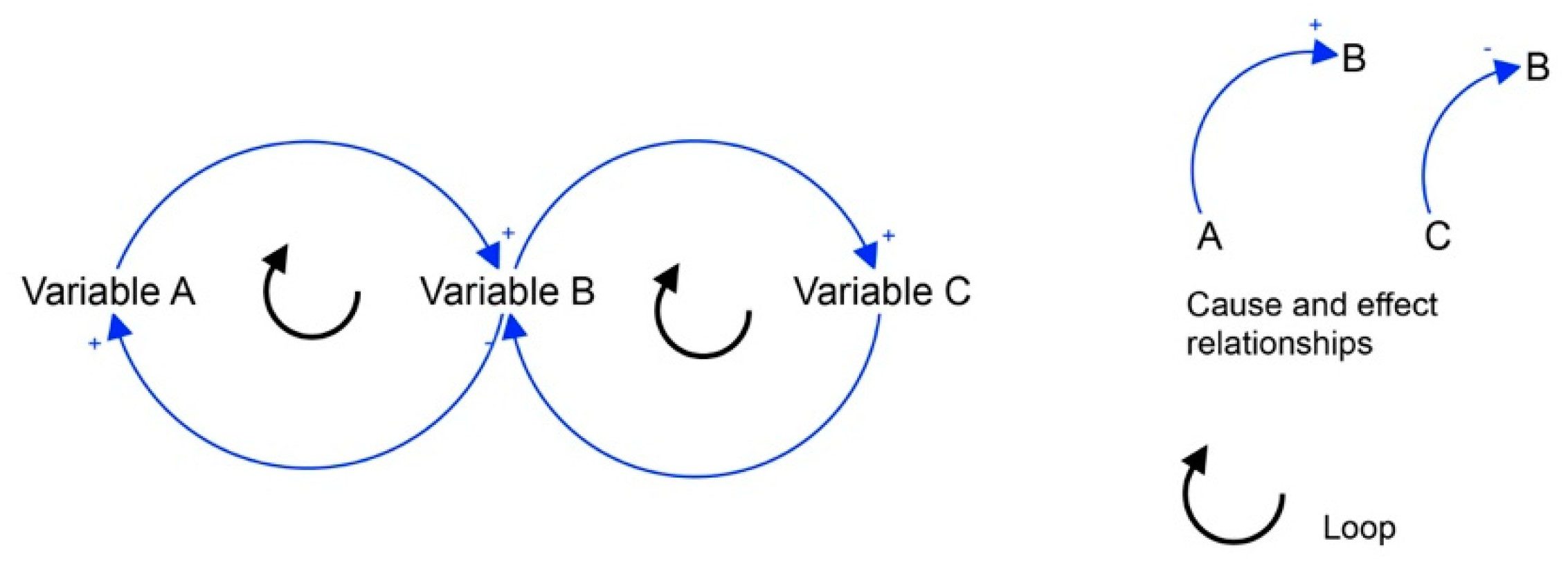 Fig.1 Causal loop general structure. (Bottero M, et al., 2020)
Dynamic system modeling focuses on how systems respond and evolve over time under changing inputs and operating conditions. At SysMathx, we build structured models that capture system dynamics in a clear and usable way, supporting simulation, analysis, and performance evaluation across engineering applications.
| Services | Capabilities |
|---|---|
|
System Structuring
|
We begin each project by working closely with clients to understand the system context, objectives, and constraints before defining how the system is structured and how different elements interact over time.
|
|
Time-Domain Simulation and Response Analysis
|
We then build and refine models to simulate how systems respond under varying conditions and inputs, ensuring the setup reflects realistic operating scenarios and engineering requirements.
|
|
System Behavior and Sensitivity Analysis
|
We further use dynamic models to examine system behavior in depth, focusing on identifying the key factors that influence performance and understanding how changes propagate through the system.
|
|
Model Implementation and Workflow Integration
|
Finally, we prepare and deliver models that can be directly applied within engineering workflows, ensuring they are organized, documented, and practical for continued use and integration.
|
Methods Used in Dynamic System Modeling Services
Dynamic system modeling methods are applied to represent how systems evolve over time using structured, system-level formulations. These methods combine mathematical representations with practical modeling strategies to capture system dynamics, interactions, and responses under different operating conditions. In practice, the choice of methods depends on system complexity, modeling objectives, and how the results will be used in engineering analysis and decision-making.
Applications of Dynamic System Modeling
Dynamic system modeling is widely applied across engineering and scientific domains to represent how systems evolve over time under varying conditions. By capturing interactions, feedback, and time-dependent behavior, it supports analysis, simulation, and system-level evaluation. The following applications illustrate how it is used in different technical scenarios.
Control System Design and Optimization
Dynamic system models are used to represent system behavior for controller design, stability assessment, and performance tuning. They help evaluate how systems respond to inputs and disturbances before implementation, enabling more informed design decisions and improved overall system robustness under varying operating conditions.
Mechanical and Structural System Analysis
Applied to study motion, vibration, and load response in mechanical components and assemblies. Models are used to predict dynamic behavior under forces and changing boundary conditions, helping assess structural performance, identify potential resonance effects, and evaluate system response under time-varying loads and constraints.
Thermal System Simulation
Used to analyze heat transfer and temperature evolution in systems such as electronics, equipment, and industrial processes. It supports evaluation of transient and steady-state thermal behavior under varying operating conditions, helping assess temperature distribution, heat dissipation, and system response over time.
Electrical and Power System Modeling
Used to represent circuits and power systems where voltage, current, and power vary over time. It enables analysis of transient responses, stability, and load variation effects, while supporting system-level evaluation, fault behavior assessment, and performance under dynamic operating conditions across different scenarios.
Process and Industrial System Modeling
Applied in process systems to simulate transport, mixing, reaction, and flow behavior over time. It supports system design, scaling, and operational analysis across varying conditions, enabling evaluation of process dynamics and consistency under real-world operating scenarios, while supporting optimization and improved decision-making in complex industrial environments.
Multi-Domain System Integration
Used to model systems involving interactions across multiple physical domains, such as electro-mechanical or thermo-fluid systems. It provides a unified view of coupled system behavior for system-level evaluation, supporting analysis of interdependencies, cross-domain effects, and overall performance under varying operating conditions and constraints.
Why Choose Us?
- System-level expertise - Experience in building structured dynamic models across a wide range of engineering systems.
- Customized approach - Models are tailored to specific system requirements and project objectives.
- Simulation-ready outputs - Deliverables are organized for direct use in simulation and analysis workflows.
- Consistent and reliable modeling - Focus on clear assumptions, stable structure, and reproducible results.
- Support for complex systems - Capability to handle multi-variable and coupled system dynamics in an integrated way.
Get Started with Your Dynamic System Modeling Project!
Ready to move from concept to a structured dynamic model? Share system details and project goals to begin a discussion on a tailored modeling approach. For complex or coupled systems, a brief consultation can help clarify assumptions, inputs, and expected outcomes before implementation. Contact us and we'll set up a modeling workflow that actually supports your simulation, analysis, and decision-making.
FAQs
What information is needed to start a dynamic system modeling project?
Key inputs typically include system description, objectives, key variables, operating conditions, and any available data or constraints to define the modeling scope.
Can dynamic system models handle coupled or multi-domain systems?
Yes, models can be constructed to represent interactions across subsystems and physical domains, enabling integrated system-level analysis and simulation.
What formats are the modeling results delivered in?
Deliverables usually include structured model representations, simulation-ready configurations, and documentation that supports further analysis and workflow integration.
How are model assumptions determined during the process?
Assumptions are defined collaboratively based on system characteristics, available data, and modeling objectives to ensure consistency and practical applicability.
Reference
- Bottero M, et al. A system dynamics model and analytic network process: An integrated approach to investigate urban resilience. Land. 2020, 9(8): 242.