
Mechanism-Data Fusion Modeling Services
SysMathx provides mechanism-data fusion modeling services that combine physics-based models with data-driven corrections to improve overall accuracy and robustness. In many engineering systems, basic physical models capture the main behavior but still contain errors due to simplifications or missing effects. A learned correction is added to reduce these errors while keeping the original model structure. We also offer physics-informed neural networks for partial differential equation problems with limited data, and grey-box model identification for systems with known structure but unknown components.
Why Mechanism-Data Fusion for Imperfect Physics Models
Pure physics-based models are often incomplete — they may use simplified geometry, neglect certain coupling effects, or rely on approximate closure laws. Pure data-driven models trained on limited data may not generalize outside the training regime. Fusion modeling bridges these approaches by treating the physics model as a strong baseline and using data to learn a correction term, combining the strengths of both.
- Correct systematic errors – Physics models often have biases due to simplifications. A data-driven correction term learns the residual, improving accuracy without discarding the physical backbone.
- Maintain extrapolation safety – When inputs move outside the training range, the physics model still provides a reasonable baseline, preventing the wild extrapolation typical of pure neural networks.
- Reduce data requirements – Because the fusion model starts from a reasonable physics baseline, less data is needed to learn the correction compared to learning the entire mapping from scratch.
- Preserve interpretability – The physics component remains interpretable; the correction term can be analyzed to understand where and why the base model fails.
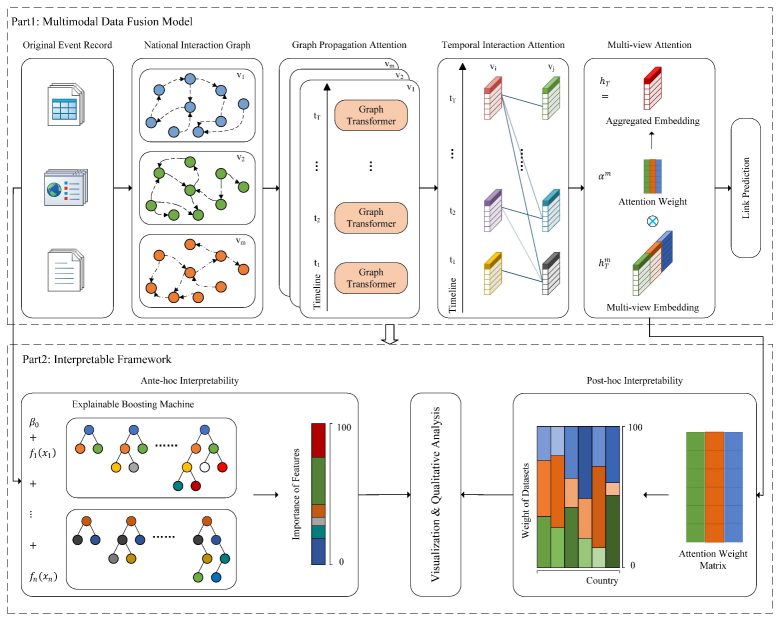 Fig.1 Overall architecture of the interpretable multimodal data fusion framework. (Dong J, et al., 2025)
At SysMathx, we provide mechanism-data fusion solutions tailored to different types of physics models and correction structures — from additive residuals to multiplicative factors and physics-based feature augmentation.
| Services | Capabilities |
|---|---|
|
Additive Residual Correction
|
When the physics model captures the main trend but still shows systematic deviation, a data-driven model is trained to learn the residual between prediction and observation. This residual is then added to the physics output to improve accuracy while keeping the original structure unchanged. It is widely used because it is simple and highly interpretable.
|
|
Multiplicative Correction & Scaling Factors
|
When the physical form is correct but the magnitude is inaccurate due to parameter or calibration issues, a learned scaling factor is introduced. This factor adjusts the amplitude while preserving the original functional behavior of the physics model. It is often combined with other corrections for improved performance.
|
|
Physics Feature Augmentation
|
Instead of directly modifying outputs, this approach introduces learned physical terms into the model structure. These terms represent unresolved effects and are used inside the physics computation process. It is commonly applied in closure modeling and reduced-order representations.
|
|
Hybrid Switching Models
|
For systems with multiple operating regimes, different modeling strategies are applied depending on the condition. Physics-based models are used in well-understood regions, while data-driven components handle complex or uncertain regimes. Smooth transitions ensure stable behavior across all conditions.
|
Mechanism-Data Fusion Methods and Tools
Our fusion methodology combines physical modeling with data driven learning to improve prediction accuracy, robustness, and practical usability in real engineering systems. It is designed to work with existing simulation frameworks while preserving physical consistency.
Applications of Mechanism-Data Fusion Modeling
Mechanism data fusion is used in many engineering fields where a physical model exists but cannot fully match real observations. By combining physics based models with data driven corrections, system accuracy and reliability can be improved without losing physical meaning.
Turbulence Modeling in Fluid Systems
Traditional fluid models can describe overall flow behavior but often fail in complex regions such as flow separation. A data driven correction is introduced to adjust turbulence related terms based on local flow conditions. This helps improve prediction of separation and reattachment behavior compared with using the physical model alone.
Building Energy Model Calibration
Energy simulation tools can estimate heating and cooling demand, but real buildings often behave differently due to usage patterns and system operation. A correction model is learned from measured energy data to reduce this gap. The updated model provides more realistic energy demand estimation and supports better decision making for building operation.
Aerodynamic Performance Prediction
Classical aerodynamic models can capture basic lift and drag trends but struggle with real flow effects at different operating conditions. A learned correction is added using experimental or simulation data to account for these missing effects. This improves prediction across a wider range of conditions compared with purely theoretical models.
Chemical Process Output Estimation
Process models based on physical and chemical principles may not fully capture complex reaction behavior in real systems. Data driven adjustments are used to correct predicted output values based on observed plant data. This helps improve consistency between model results and actual production performance.
Structural Fatigue Assessment
Traditional fatigue models can estimate material life under ideal conditions but may ignore real factors such as surface condition or loading variation. A data based correction factor is introduced using experimental fatigue data. This improves life estimation while keeping the original physical trend structure.
Energy Demand Forecasting
Physical models can estimate energy usage weather and building characteristics, but real consumption is influenced by human behavior and operational changes. A correction is applied using historical consumption data. This leads to more accurate short term load forecasting for system planning.
Why Choose Our Mechanism-Data Fusion Services?
- Physics Preserving Structure – The original physics model is kept as the main framework and data driven corrections are only used to adjust errors or missing effects without changing its physical meaning.
- Efficient Use of Data – The physics model captures the main behavior so the learning part only needs to focus on the remaining gap, which reduces data requirements.
- Stable Prediction outside Training Range – The physics model continues to provide reasonable results beyond the training data, while the correction term is controlled to avoid unrealistic outputs.
- Separated Uncertainty Understanding – Uncertainty from physical parameters and data driven corrections is considered separately to improve clarity in model reliability.
- Easy Integration into Workflows – The combined model can be implemented in common engineering tools such as Python, MATLAB, or simulation platforms for direct use.
- Interpretable Model Correction – The correction term helps identify where the physics model is insufficient, making it easier to understand and improve the underlying assumptions.
Start Your Mechanism-Data Fusion Project Today!
Have a physics model that captures the main behavior but still shows consistent deviations, together with data that reflects these gaps? We can help you construct a hybrid model that learns from those discrepancies while preserving the original physical structure. Share your current model, data sources, and target performance requirements, and our team will design a suitable fusion approach for your application. Contact us to discuss your project and get started.
FAQs
What if my physics model is very inaccurate in some regions?
Additive or multiplicative corrections can still work, but we may need more data in those regions. If the physics model is completely wrong in some regime, a switching or hybrid architecture may be more appropriate.
Do I need to share the source code of my physics model?
Not necessarily. If the model can be run as a function, we can learn corrections from input-output pairs. However, access to internal states can enable more powerful correction approaches.
Can fusion modeling correct for missing physics, not just parameter errors?
Yes. Systematic residuals often arise from missing physics. The data-driven correction can learn these effects without requiring a reformulation of the base model.
How much data is needed compared to training a pure neural network?
Typically much less. Because the physics model provides a strong baseline, even dozens or hundreds of data points may suffice for learning a simple additive correction. More complex corrections may require thousands.
Will the fused model still satisfy conservation laws?
If the base physics model conserves mass, momentum, or energy, and the correction is additive to outputs (not to conserved fluxes), conservation is preserved. For corrections inside the solver, we can enforce conservation through architecture design.
Reference
- Dong J, et al. A novel multimodal data fusion framework: Enhancing prediction and understanding of inter-state cyberattacks. Big Data and Cognitive Computing. 2025, 9(3): 63.