
Complex Adaptive Systems Modeling Services
SysMathx offers complex adaptive systems modeling services to capture emergent behavior, nonlinear interactions, and self-organization in dynamic systems. Supporting fields such as ecology, economics, epidemiology, and social sciences, we use agent-based and network modeling to improve prediction, policy design, and system intervention strategies.
Why Complex Adaptive Systems Modeling Matters
Many real-world systems such as ecosystems, financial markets, and social networks cannot be described by linear or equilibrium models due to interacting agents that evolve through feedback, adaptation, and learning. Complex adaptive systems (CAS) modeling addresses this by focusing on decentralized interactions where small local changes can produce large, unpredictable global effects.
- Emergent behavior: Global patterns arise from local interactions without central control.
- Adaptive agents: Components adjust behavior based on experience and environmental changes.
- Nonlinear interactions: Small changes can lead to large, unexpected outcomes.
- Feedback loops: Interactions drive system evolution through amplification or stabilization.
- Self-organization: Structured patterns emerge naturally from decentralized interactions.
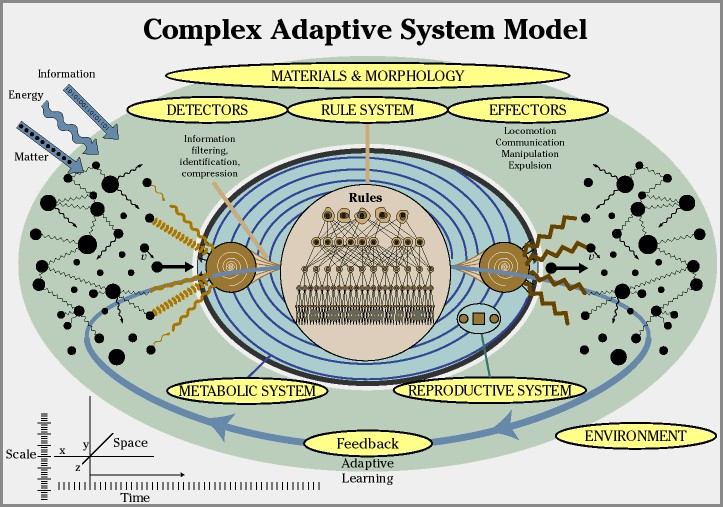 Fig.1 Complex adaptive system model. (Sergiou C, et al., 2020)
SysMathx delivers comprehensive complex adaptive systems modeling services tailored to each client's research or application needs. From conceptual model design and agent rule specification to simulation implementation and pattern analysis, we ensure methodological soundness and actionable insights.
Agent-Based Modeling Services
We use agent-based modeling to simulate emergent system behaviors driven by heterogeneous agents and their local interactions. Unlike traditional equation-based models, this approach captures macro patterns such as segregation, cooperation, or market cycles that arise from bottom-up dynamics. It is well-suited for analyzing complex social, economic, and engineering systems.
- Specification of agent attributes, behaviors, and decision rules.
- Design of interaction topologies and environmental contexts.
- Implementation of learning, adaptation, or evolutionary mechanisms.
- Analysis of emergent patterns and statistical validation against real data.
Network-Based Complex Adaptive Systems Modeling Services
We apply network-based modeling to analyze how agent interactions shape behavior across social, economic, and ecological systems. By investigating connectivity and network evolution, this framework uncovers how information flow and system robustness emerge over time.
- Construction of interaction networks from empirical or synthetic data.
- Analysis of network properties such as centrality, clustering, and resilience.
- Modeling of diffusion, contagion, or influence processes on networks.
- Simulation of co-evolution between network structure and agent states.
Evolutionary and Adaptive Dynamics Services
We employ evolutionary modeling to simulate population dynamics driven by selection, mutation, and adaptation. By mapping the emergence and diffusion of successful strategies, this framework clarifies how systems evolve and compete within shifting environments—whether analyzing genetic traits, cultural shifts, or strategic market adaptation.
- Specification of fitness landscapes and selection mechanisms.
- Modeling of mutation, recombination, and inheritance processes.
- Analysis of evolutionary stable strategies and convergence behavior.
- Simulation of co-evolutionary dynamics between interacting populations.
Pattern and Emergence Analysis Services
We use pattern analysis to interpret simulation results, identifying regularities, tipping points, and phase transitions in complex adaptive systems. By distilling high-dimensional simulation output into clear summaries, we reveal regime shifts, key influencing parameters, and how well simulated patterns align with real-world observations.
- Detection of emergent macro-level patterns from micro-level simulation data.
- Identification of regime shifts and critical thresholds in system behavior.
- Sensitivity analysis of model outcomes to agent rules and parameters.
- Visualization and interpretation of simulation results for stakeholder communication.
Complex Adaptive Systems Modeling Methods
SysMathx provides complex adaptive systems modeling services to analyze interacting, adaptive agents and uncover emergent behavior in large-scale dynamic systems. We apply computational and analytical methods tailored to the research question, data availability, and required level of detail to support system understanding, simulation, and decision-making.
Applications of Complex Adaptive Systems Modeling Services
Ecology and Environmental Management
We operate CAS Modeling to mirror ecosystems where diverse species interact and adapt to environmental shifts. Through evaluating predator-prey cycles, habitat fragmentation, and climate impacts, this approach buttresses conservation strategies and the sustainable oversight of natural resources.
Economics and Financial Markets
We utilize CAS Modeling to recreate financial environments populated by diverse traders and evolving strategies. By dissecting the mechanics of booms, crashes, and herding effects, this framework provides a deep understanding of market stability and the early warning signs of systemic risk.
Epidemiology and Disease Spread
We exploit CAS modeling to map disease transmission driven by individual actions and social connectivity. By projecting intervention outcomes, this methodology strengthens public health strategies by accounting for real-world adaptive responses.
Urban Planning and Transportation
We harness CAS modeling to decode how individual decisions evolve traffic, land use, and pedestrian flow. By examining commuter habits, this framework clarifies how infrastructure shifts impact congestion and urban accessibility.
Why Choose Complex Adaptive Systems Modeling Services?
- Captures Emergent Behavior: Shows how global patterns arise from local interactions.
- Tests policies in Silico: Evaluates interventions before real-world implementation to reduce risk and cost.
- Flexible Modeling: Works for both abstract and data-driven simulations.
- Visual Outputs: Produces clear graphs, animations, and network representations.
- Cross-disciplinary: Applies across ecology, economics, sociology, epidemiology, and engineering.
Start Your Complex Adaptive Systems Modeling Project!
SysMathx provides complex adaptive systems modeling to analyze systems where local interactions between agents generate emergent collective behavior and support the exploration of intervention strategies. By providing a brief description of the problem—such as agent types, interaction structures, adaptation mechanisms, and key objectives—a tailored modeling approach can be developed to match the system characteristics. Contact us to discuss the project and next steps.
FAQs
What types of systems are suitable for complex adaptive systems modeling?
Systems with many interacting components, dynamic behavior, and decentralized decision-making are well suited for this approach.
How are agent behaviors defined in the model?
Agent rules are specified based on domain knowledge, data, or simplified assumptions, and can include learning or adaptive mechanisms.
Can real-world data be incorporated into the model?
Yes, empirical data can be used to define agents, calibrate parameters, or validate simulation outcomes.
How is model reliability evaluated?
Reliability is assessed through sensitivity analysis, comparison with observed patterns, and consistency across multiple simulation runs.
What outputs can be expected from the modeling process?
Outputs include time-evolving system behavior, emergent patterns, statistical summaries, and visualizations such as networks or animations.
Is this approach suitable for testing strategies or policies?
Yes, different scenarios can be simulated to evaluate potential interventions and understand their impact before real-world implementation.
Reference
- Sergiou C, et al. Complex systems: A communication networks perspective towards 6G. Ieee Access. 2020, 8: 89007-89030.