
Algorithm Modeling Service Platform
Algorithm modeling service platforms refer to centralized, high-performance environments designed to conceptualize, develop, validate, deploy, and govern sophisticated mathematical algorithms. At SysMathx, our algorithm modeling service platform streamilnes the entire algorithm lifecycle—bridging the gap between sandbox prototyping and industrial-scale production. By supporting advanced algorithmic design, multi-objective optimization, and real-time inference, the platform empowers organizations to turn complex theoretical mathematics into high-impact operational decisions.
Why is Scaling Algorithms from Prototype to Industrial Production So Difficult?
In modern enterprise and industrial ecosystems, scaling algorithms from a researcher's desktop to a production-grade infrastructure is notoriously difficult. Organizations frequently suffer from broken deployment pipelines, algorithmic drift, lack of standardized validation, and high latency in real-time execution. An integrated algorithm modeling service platform operationalizes the entire workflow, eliminating the friction between data science, engineering, and core business operations.
- Rapidly transition from mathematical prototypes to production-ready API endpoints.
- Centralized model registries, version control, and comprehensive lineage tracking for regulatory compliance.
- High-throughput, low-latency execution engines capable of handling real-time, large-scale industrial data streams.
- Automated drift detection, shadow deployment capabilities, and continuous performance monitoring.
- A unified environment that harmonizes workflows between academic researchers and data scientists.
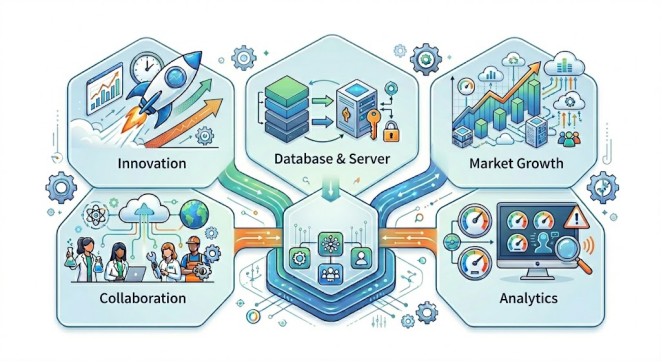
SysMathx provides a comprehensive algorithm modeling service platform engineered to assist organizations in designing, testing, and orchestrating mission-critical algorithms. Built to satisfy the demanding requirements of engineering, scientific research, and complex industrial applications, the platform integrates robust computational frameworks with flexible deployment architecture. By transforming sophisticated mathematical logic into reliable digital assets, our platform enables organizations to automate decision-making, optimize assets, and future-proof their technological infrastructure.
End-to-End Algorithm Lifecycle Management
SysMathx unifies the disparate stages of algorithm development into a singular, cohesive pipeline. From initial mathematical formulation and hyperparameter tuning to containerized deployment and continuous retraining, the platform provides complete visibility and control. This structured approach reduces code duplication, minimizes cross-team handoffs, and ensures that production algorithms remain mathematically sound and aligned with evolving operational goals.
Real-Time Inference and Decision Automation
Modern operational environments demand split-second precision. SysMathx features a high-performance execution engine engineered for low-latency, real-time algorithmic inference. Whether deployed on-premises, in the cloud, or at the network edge, our platform processes high-velocity data streams to deliver instantaneous tactical recommendations. This enables organizations to automate complex workflows, dynamically respond to anomalies, and maintain a competitive edge.
Enterprise-Grade Scalability and Resilience
As data environments grow and algorithmic logic becomes more intricate, infrastructure must scale accordingly. We provide dynamic resource allocation and distributed computing frameworks that seamlessly handle intensive algorithmic workloads. Designed to maintain structural stability under extreme computational stress, our solutions support continuous high-availability operations, ensuring that strategic systems never experience performance degradation.
Comprehensive Validation and Shadow Testing
Deploying unverified algorithms into live production environments introduces unacceptable operational risks. We incorporate a robust algorithm verification suite that allows teams to stress-test models against historical baselines and simulated edge cases. Furthermore, our platform supports shadow deployment (running new algorithms in parallel with existing ones without affecting live outputs) to safely evaluate performance and accuracy under true production conditions.
Secure and Compliant Algorithmic Auditing
Trust and transparency are paramount when algorithms govern critical infrastructure or high-value assets. SysMathx embeds rigid governance protocols directly into the platform architecture. Every model adjustment, training dataset iteration, and deployment action is logged within an immutable audit trail. This end-to-end traceability ensures adherence to internal compliance standards and external regulatory frameworks while safeguarding intellectual property.
Core Platform Capabilities
SysMathx's algorithm modeling service platform combines multiple analytical technologies within a unified environment, enabling organizations to address a wide range of modeling, simulation, optimization, and decision-support challenges. Our platform integrates advanced computational methods, analytical tools, and data-driven technologies that support the complete workflow from model development and analysis to simulation, validation, and decision support.
Services Supported by Our Platform
SysMathx's platform supports a comprehensive range of analytical, modeling, and simulation services designed to help organizations understand complex systems, evaluate performance, and support informed decision-making. By combining advanced mathematical methods, computational technologies, and data analytics within a unified environment, our platform enables the development of tailored solutions for engineering, scientific, and industrial applications.
| Items | Descriptions |
|---|---|
| Mathematical Modeling Services | We support the development of mathematical models for physical systems, operational processes, and complex interactions. Engineers and scientists can use our algorithmic services to turn real-world industrial constraints into rigorous mathematical logic. This gives them a solid foundation for custom algorithm prototyping, testing, and ongoing refinement. |
| Mathematical Analysis Services | With a data analysis and modeling platform, you get advanced analytical capabilities for looking into system characteristics, performance, uncertainty, and stability. Our platform backed algorithmic analysis services let organizations run thorough error propagation checks, evaluate numerical stability, measure structural uncertainties, and see how core algorithmic models behave under highly volatile baseline conditions. |
| Mathematical Simulation & Dynamical Evolution Analysis Services | We support simulation based studies that look at how systems change over time and react to different operating conditions, inputs, and environmental factors. By running time stepping algorithms, differential equation solvers, and discrete event simulations, our platform driven services let organizations model complex temporal behaviors dynamically and predict system trajectories before real industrial deployment. |
Comprehensive Industry Solutions
Our platform provides a unified analytical environment that scales sophisticated algorithmic logic across diverse, high-barrier industry sectors.
Optimizes supply chain logistics, dynamically schedules complex shop-floor operations, and drives automated quality control via computer vision and pattern recognition algorithms. The platform minimizes idle times and maximizes asset utilization across highly variable production lines. With our solutions, manufacturers can adapt to shifting demand more quickly and keep production flowing with fewer unexpected stops.
Drives algorithmic load forecasting, grid balancing, and smart charging protocols for renewable energy portfolios. In traditional energy sectors, the platform powers complex reservoir simulation algorithms and fluid dynamics logic to optimize extraction and distribution safety. Our platform helps energy companies balance supply and demand more effectively while cutting down on operational risks and unplanned outages.
Powers algorithmic routing, traffic flow optimization, and structural health monitoring for large-scale civil networks. By processing multi-sensor IoT inputs, the platform helps municipalities and private operators automate predictive maintenance schedules for bridges, grids, and transit systems. With our platform, infrastructure managers can detect potential failures earlier and direct repair resources where they are needed most.
Supports dynamic bandwidth allocation, network slicing algorithms, and automated anomaly detection for high-capacity 5G/6G infrastructures. The platform allows operators to algorithmically predict network congestion and automatically re-route traffic to guarantee Service Level Agreements (SLAs). Our platform enables telecom providers to maintain consistent service quality and lower the costs associated with managing complex networks.
Advantages of SysMathx's Algorithm Modeling Service Platform
- Control runs from initial mathematical notation all the way to enterprise API.
- Low-latency execution handles high-frequency, real-time decisions.
- Shadow testing and strict validation protocols help avoid deployment risks.
- Connects smoothly with existing enterprise ERPs, industrial IoT edges, and cloud data warehouses.
Ready to Scale Innovation from Prototype to Production?
Thinking about moving from prototype to production? Maybe you need to deploy real-time predictive algorithms, improve how assets are allocated, or put tighter controls on your corporate model registry. SysMathx has the infrastructure and the math expertise to make it work. Contact us to talk through your project specs and see how our algorithm modeling service platform can improve what you're able to do operationally.
FAQs
What types of algorithms can be developed using the Algorithm Modeling Service Platform?
The algorithm modeling service platform supports a wide range of algorithms, including optimization, predictive analytics, machine learning, simulation, and decision-support algorithms. The platform can accommodate both research-oriented algorithm development and production-grade industrial implementations. Its flexible architecture allows organizations to adapt algorithmic solutions to diverse technical and operational requirements.
How does the platform support algorithm deployment and productionization?
Our platform supports the complete algorithm lifecycle from development and testing to deployment and ongoing management. Built-in validation, version control, and monitoring capabilities help ensure consistency and reliability during production deployment. This approach reduces the challenges commonly associated with transitioning algorithms from prototype environments to operational systems.
Can the platform support real-time decision-making applications?
Yes, the platform is designed to support real-time inference, automated decision-making, and low-latency algorithm execution. Organizations can process incoming data streams and generate actionable outputs with minimal delay. These capabilities are particularly valuable for applications that require rapid responses and continuous operational monitoring.
How does the platform ensure algorithm reliability and performance?
The platform incorporates validation, testing, performance monitoring, and algorithm governance capabilities throughout the development lifecycle. Organizations can evaluate algorithm behavior, identify potential performance issues, and monitor model drift over time. These capabilities help maintain accuracy, consistency, and confidence in algorithm-driven decisions.
Which industries can benefit from the Algorithm Modeling Service Platform?
The platform supports applications across engineering, manufacturing, energy, infrastructure, telecommunications, scientific research, and other data-intensive sectors. Its scalable architecture enables organizations to address both technical and operational challenges using advanced algorithmic methods. This flexibility allows the platform to support a broad range of industry-specific requirements and use cases.