
Data-Driven Modeling Services
SysMathx provides data-driven modeling services that build predictive models directly from measurement data when full first-principles descriptions are unavailable. We combine statistical modeling, nonlinear system identification, and network system modeling to capture uncertainty, dynamic behavior, and interconnections in complex engineering systems. Our solutions support better system understanding, prediction, and decision-making in real-world applications.
The Value of Data-Driven Modeling for Engineering Systems
Data-driven modeling offers a practical way to describe engineering systems when full analytical formulations are difficult to obtain. Rather than depending on complete governing equations, system behavior is inferred directly from measured data, including hidden relationships and time-varying patterns. The approach works particularly well for complex systems with many variables or incomplete observability, and it naturally complements physics-based methods.
The main advantages can be summarized as follows:
- Learning behavior from measurements – System relationships are derived directly from observed data, without requiring explicit mathematical descriptions of the underlying mechanisms.
- Turning operational data into usable models – Information from sensors, experiments, and historical records is organized into structured representations for further analysis.
- Adapting to evolving conditions – Model structure and parameters can be updated as new data becomes available, allowing changing system behavior to be reflected over time.
- Supporting prediction and decisions – Generated models can be used to explore future system responses and support engineering decisions under real-world conditions.
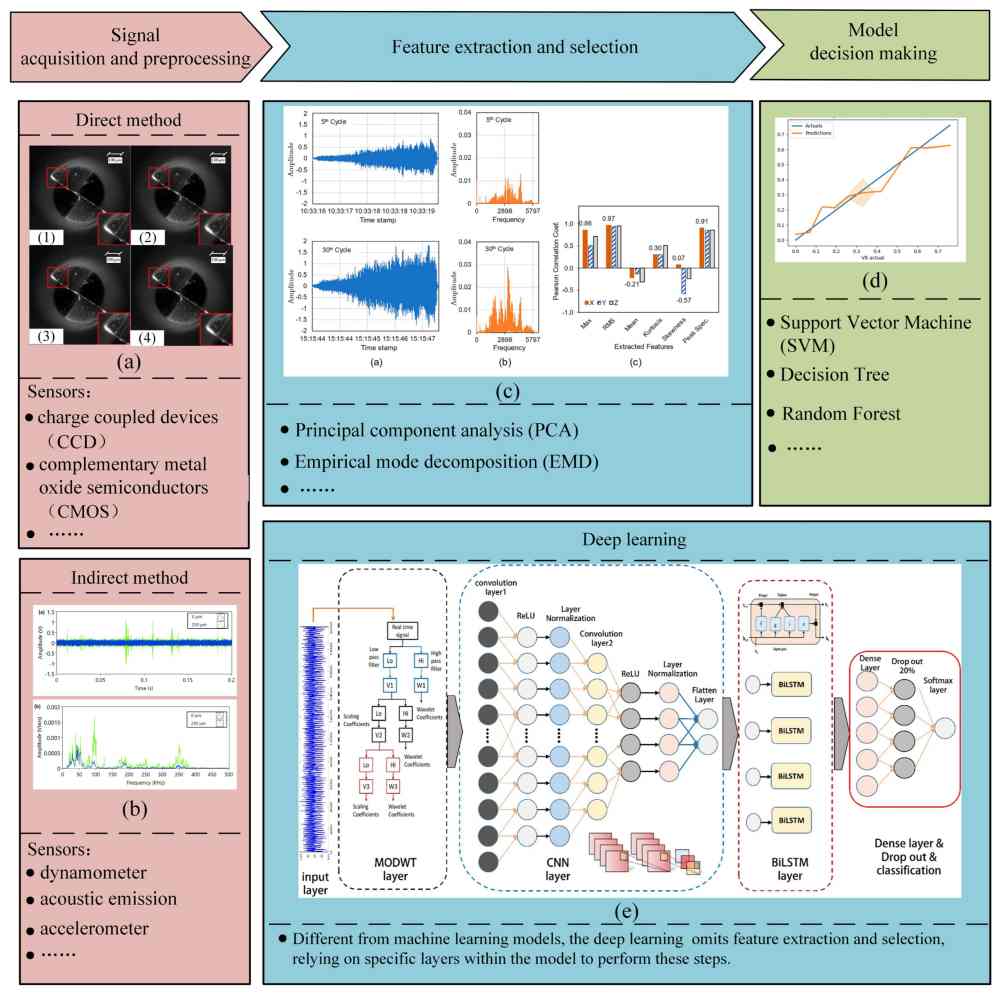 Fig.1 A flow chart of data-driven TWM. (Zhang H, et al., 2024)
At SysMathx, we provide a comprehensive suite of data-driven modeling services, each addressing a different class of engineering problems. The choice of approach depends on your data characteristics, system behavior, and modeling objectives.

Statistical Modeling Services
Statistical modeling focuses on capturing relationships between variables, quantifying uncertainty, and testing hypotheses from data that may be noisy, sparse, or incomplete. This approach is well-suited for problems where interpretability and confidence bounds matter more than high-frequency dynamics. Typical applications include regression analysis and response surface modeling, time series analysis and forecasting, uncertainty quantification and error propagation, and design of experiments for efficient data collection.

Nonlinear System Identification Services
When the goal is to build dynamic models that describe how a system responds to inputs over time — especially when behavior is nonlinear — nonlinear system identification is the appropriate choice. These methods construct input-output models directly from time-series measurements, capturing phenomena such as friction, saturation, hysteresis, and other nonlinearities that linear models miss. Typical applications include nonlinear autoregressive models, block-structured modeling approaches, sparse identification methods for dynamic systems, and differential equation models enhanced with data-driven components.

Network System Modeling Services
For interconnected systems where interactions between components are as important as individual behaviors, network system modeling captures dependencies, flows, and influence patterns across graph-structured systems. This approach is essential when disturbances propagate through connections, or when the system topology determines overall behavior. Typical applications include graph-based regression and network propagation modeling, network structure inference from nodal observations, dynamic network identification with time-varying connections, and spatial-temporal graph models for networked time series.
SysMathx provides data-driven modeling solutions that convert measurement data into structured representations of complex systems. These solutions are designed to extract hidden patterns, system behavior, and interaction structures directly from observations, especially when governing equations are incomplete or unavailable.
| Items | Contents |
|---|---|
| Pattern-Oriented Modeling Solutions |
|
| Behavior Reconstruction Solutions |
|
| Interaction Structure Modeling Solutions |
|
| Temporal Evolution Modeling Solutions |
|
Applications of Data-Driven Modeling Services
Data-driven modeling is applied across a wide range of engineering and scientific domains where system behavior must be inferred from measurements rather than explicit physical equations. It is particularly valuable in complex, high-dimensional, or partially observed systems where traditional modeling approaches are limited. The following applications illustrate typical use cases.
Predictive System Behavior Modeling
Data-driven approaches enable prediction of system responses under varying operating conditions. Models are constructed from historical measurements to capture both steady-state trends and dynamic evolution. Future system behavior can then be estimated without requiring explicit governing equations.
Industrial Process Monitoring & Optimization
Operational data from industrial systems is continuously analyzed to characterize process behavior. Hidden inefficiencies and performance patterns are identified through learned relationships in the data. Improved process stability and operational efficiency can be achieved through these insights.
Anomaly Detection in Complex Systems
Abnormal system behavior is detected by comparing real-time measurements against learned normal patterns. Deviations from expected behavior may indicate faults, degradation, or unexpected operating conditions. Large-scale sensing environments benefit particularly from this capability.
System Behavior Reconstruction
Incomplete measurement data is supplemented through inferred relationships among observed variables. Missing system information can be estimated by leveraging structure embedded in historical data. A more complete representation of system behavior becomes available even under limited observability.
High-Dimensional Data Interpretation
Complex systems with many variables are transformed into more structured and interpretable representations. Dominant patterns and key contributing factors are extracted from high-dimensional datasets. Reduced complexity supports clearer understanding of system organization.
Decision Support for Engineering Systems
Quantitative model outputs support evaluation of different operational scenarios. Comparative analysis of system responses enables more informed engineering decisions. Data-driven insights provide a basis for selecting optimal operational strategies.
How We Work?
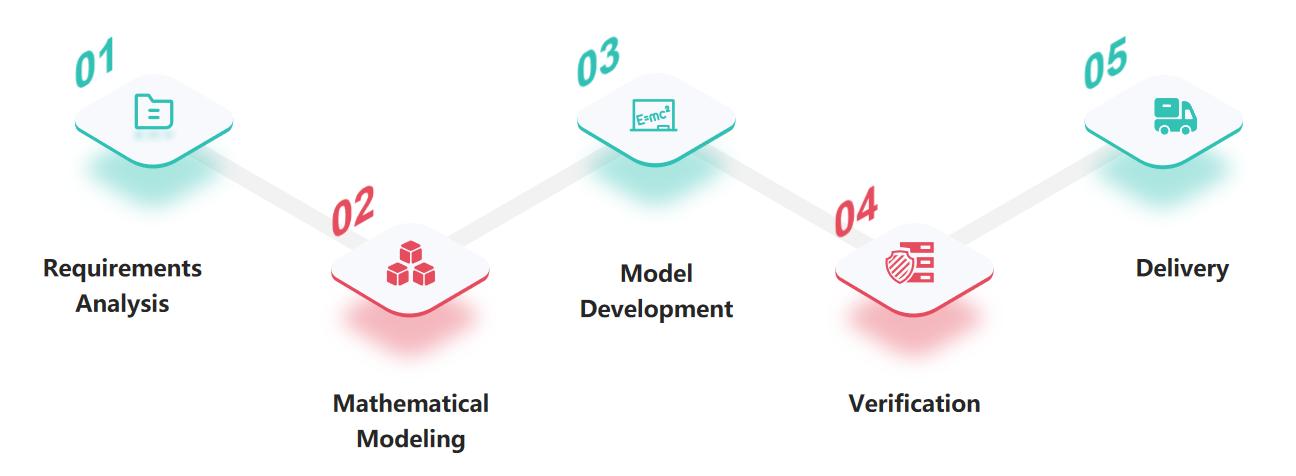
SysMathx employs a structured, phased project management approach to ensure the efficient and timely progress of each data-driven modeling project we deliver.
Start Your Data-Driven Modeling Project Today!
Have measurement data and an engineering problem — but unsure which modeling approach fits best? Let us help you navigate the options and build a model that delivers reliable, interpretable results. Contact us with a description of your system and available data, and our technical team will propose a tailored data-driven modeling strategy. Each solution is developed based on the nature of your system and the type of insights required, ensuring practical and actionable outcomes.
FAQs
Which data-driven modeling approach should be used?
Selection depends on the modeling objective and system characteristics. Statistical modeling is typically used for uncertainty analysis and inference from limited or noisy data. Nonlinear system identification is suitable for capturing dynamic input–output behavior from time-series measurements. Network system modeling is preferred when interactions between multiple components play a central role. A short discussion of the problem is usually sufficient to identify an appropriate approach.
How much data is required?
Data requirements vary depending on system complexity and modeling goals. Statistical modeling may work with relatively small datasets when prior information is available. Nonlinear system identification generally requires moderate to large datasets to capture dynamic behavior reliably. Network-based models often require more data as system size and connectivity increase, and data sufficiency is assessed before modeling begins.
Is physics-based modeling still necessary?
Physics-based modeling remains valuable and often complements data-driven approaches. Prior physical knowledge can guide model structure, improve stability, and support validation. Hybrid strategies that combine physical constraints with data-driven learning are commonly used when partial system knowledge is available.
Can multiple data sources be integrated?
Multiple data sources can be incorporated into a unified modeling framework. Data from different sensors, sampling rates, or experimental conditions can be aligned and jointly analyzed. Appropriate modeling structures allow consistent integration while preserving differences in data quality and scale.
What outputs are provided at the end of a project?
Project deliverables typically include trained models, documented code, and validation results. Supporting materials such as visualizations and interpretation summaries are also provided. Optional outputs such as deployment interfaces or real-time inference pipelines can be delivered based on project needs.
Reference
- Zhang H, et al. A review of physics-based, data-driven, and hybrid models for tool wear monitoring. Machines. 2024, 12(12): 833.