
Model Validation and Verification (V&V) Capability
Model validation and verification (V&V) uses systematic computational and experimental methods to check whether models accurately represent real systems. SysMathx includes V&V capabilities for verifying model correctness, assessing predictive accuracy, and evaluating reliability under expected conditions. These processes support more robust engineering and scientific decision-making in complex systems.
What Model V&V Capabilities Enable
Model verification and validation capabilities play a critical role in ensuring the reliability and trustworthiness of computational models across engineering and scientific workflows. These methodologies systematically identify modeling discrepancies, quantify inherent uncertainties, and establish the necessary confidence in predictions used for system design, simulation, and operational decision-making.
- Error Detection and Consistency: V&V identifies mismatches between mathematical models and physical systems by rigorously evaluating mathematical stability, convergence, and algorithmic correctness to ensure equations are solved accurately.
- Predictive Accuracy Validation: Model predictions are benchmarked against experiments, field data, or baselines to guarantee that computational outputs remain reliable across diverse operational regimes and boundary conditions.
- Uncertainty Quantification: V&V tracks how input variability, parameter tolerances, and structural assumptions propagate through models, delivering the quantifiable confidence intervals required for risk-informed decisions.
- Performance and Reliability Assessment: Subjecting models to standardized protocols tests their limits under edge cases and parameter variations, establishing a verifiable foundation for simulation accuracy and resilient design.
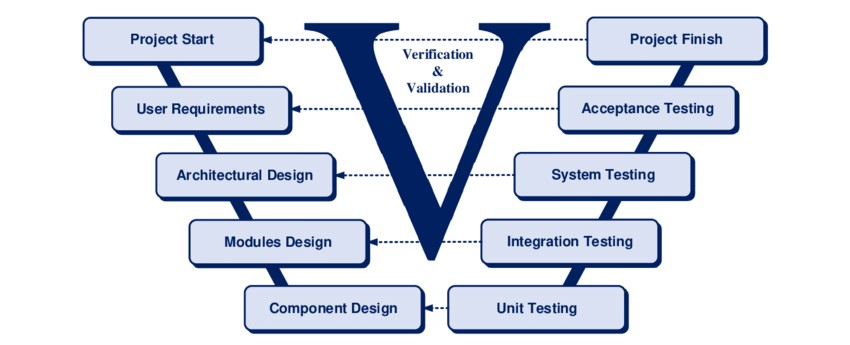 Fig.1 High-performance scientific computing cluster architecture. (Zhu W., 2022)
SysMathx applies advanced model validation and verification methods to eliminate inaccuracies and uncertainty in complex engineering simulations. Combining computational, statistical, and experimental approaches, we transform unverified data into high-fidelity, robust models, providing scientists with the actionable insights needed to back mission-critical decisions.
Verification Capability
Verification capability focuses on confirming that computational models are implemented correctly and operate as intended. We ensure algorithmic correctness, mathematical stability, and solution convergence, which are essential for trustworthy simulation results. Our verification methods allow for early detection of potential model implementation errors before deployment in critical applications.
Capability features include:
- Systematic checking of model implementation against design specifications and mathematical methods
- Ensuring code correctness, convergence, and computational stability
- Identifying algorithmic inconsistencies or potential mathematical errors
- Supporting rigorous testing frameworks for high-fidelity models
Validation Capability
Validation capability assesses how well model predictions align with real-world data or experimental observations. We use this capability to build confidence in model outputs for engineering design, safety assessments, and operational planning. This ensures that decisions based on model predictions are reliable and aligned with actual system behavior.
Capability features include:
- Comparing model predictions with experimental or field measurements
- Quantifying model accuracy under varying operational conditions
- Supporting iterative improvement of model structure and parameters
- Ensuring models remain predictive across intended usage ranges
Uncertainty and Sensitivity Analysis Capability
Uncertainty and sensitivity analysis evaluates the influence of input variations, model parameters, and structural assumptions on outputs. Our approach enables risk-informed decisions and identifies the most critical factors impacting system behavior. By understanding these sensitivities, we can prioritize model refinement and experimental validation efficiently.
Capability features include:
- Propagating uncertainties through computational models to assess prediction confidence
- Identifying sensitive parameters and model components that significantly affect outputs
- Supporting robust system design and decision-making under uncertainty
- Integrating probabilistic analysis to guide experimental planning and resource allocation
Performance and Reliability Assessment Capability
Performance and reliability assessment capability evaluates model behavior under extreme or variable conditions to ensure robustness. We apply this capability to confirm that models can support safe, resilient, and optimized system operation. This assessment helps stakeholders make informed decisions when models are applied in critical or high-risk scenarios.
Capability features include:
- Stress-testing models under edge-case scenarios and multi-parameter variations
- Quantifying reliability metrics to support high-stakes decision-making
- Validating long-term predictive performance and stability
- Informing design improvements and operational strategies based on model insights
Experimental Data Consistency Capability
Experimental data consistency capability evaluates whether computational model outputs remain consistent with measured data collected from laboratory experiments, field observations, and operational systems. We use this capability to improve confidence in model calibration, identify discrepancies between predictions and observations, and support reliable engineering interpretation.
Capability features include:
- Comparing simulation outputs with multi-source experimental and observational datasets
- Detecting inconsistencies between measured data and computational predictions
- Supporting calibration and refinement of engineering and scientific models
- Improving confidence in data-driven and physics-based computational workflows
Robustness and Scenario Evaluation Capability
Robustness and scenario evaluation capability assesses model performance across varying operational environments, uncertain conditions, and extreme parameter combinations. We apply this capability to ensure computational models remain stable, reliable, and interpretable under diverse engineering and scientific scenarios.
Capability features include:
- Evaluating model behavior across multiple operating and environmental scenarios
- Testing model robustness under uncertain and extreme parameter conditions
- Supporting resilient engineering design through scenario-based assessment
- Identifying performance limitations and operational risks within complex systems
Where Our Capabilities Are Applied
Our model validation and verification (V&V) capabilities are applied across mathematical modeling, system analysis, and simulation workflows involving complex engineering and scientific systems. These capabilities help ensure that computational models remain accurate, reliable, and robust under varying operational conditions, uncertainties, and dynamic environments.
Industries and Systems We Support
Our model validation and verification (V&V) capabilities support engineering and scientific systems requiring reliable computational models, predictive accuracy, and robust simulation performance. These capabilities are widely applied in safety-critical, data-intensive, and computationally complex environments across multiple industries.
Aerospace and Defense
We apply our V&V capabilities to aerospace and defense systems involving flight dynamics, structural analysis, mission simulation, and control system verification. These capabilities help ensure simulation reliability, operational safety, and robust system performance under demanding conditions.
Energy and Power Systems
Our capabilities support validation and verification of energy distribution networks, renewable energy systems, and power system simulations. We help improve prediction accuracy, operational stability, and risk assessment for large-scale and highly interconnected infrastructure systems.
Manufacturing and Industrial Engineering
We use V&V capabilities to support manufacturing process modeling, production system simulation, and industrial optimization workflows. These capabilities improve system reliability, process consistency, and decision-making efficiency across complex industrial operations.
Automotive and Transportation Systems
Our V&V solutions are applied in vehicle dynamics simulation, transportation system analysis, and autonomous system verification. These methods support safe operation, performance evaluation, and reliability assessment under varying operational environments.
Healthcare and Biomedical Systems
We apply our capabilities to biomedical modeling, physiological simulation, and healthcare-related computational systems requiring accurate prediction and reliable analysis. These methods help improve confidence in medical simulations, biological system studies, and data-driven healthcare models.
Complex Engineering and Scientific Systems
Our V&V capabilities support complex adaptive systems, nonlinear dynamic systems, and large-scale computational engineering environments involving uncertainty and multi-physics interactions. These capabilities help ensure robust model behavior, stable predictions, and reliable engineering insights across advanced scientific applications.
Get Started Today!
Model validation and verification capabilities from SysMathx improve reliability, predictive accuracy, and computational robustness for engineering and scientific models. Start with a small test case or a single model component to see how V&V works before scaling up. Contact us to explore scalable V&V solutions, uncertainty-aware analysis, and advanced validation frameworks tailored to complex modeling, simulation, and computational systems.
FAQs
What is Model Validation and Verification (V&V)?
Model Validation and Verification (V&V) refers to systematic methods used to evaluate whether computational models are implemented correctly and accurately represent real-world systems. These capabilities help improve confidence in simulation results, predictive analysis, and engineering decision-making processes.
Why are V&V capabilities important in engineering systems?
V&V capabilities are important because engineering decisions often depend on reliable computational predictions and simulations. These methods help detect modeling errors, reduce uncertainty, and ensure that models remain accurate under varying operational conditions.
Can V&V be applied to both physics-based and data-driven models?
Yes, V&V capabilities can be applied to physics-based models, data-driven systems, and hybrid computational frameworks. These methods help validate predictive performance, verify mathematical implementation, and improve model reliability across different modeling approaches.
How does uncertainty affect model validation and verification?
Uncertainty can significantly influence model predictions, system behavior, and simulation reliability. Our V&V capabilities integrate uncertainty quantification and sensitivity analysis to assess confidence levels and support robust engineering decisions.
Can V&V capabilities support large-scale simulations?
Yes, our V&V capabilities are designed to support large-scale and computationally intensive simulations across engineering and scientific applications. These methods help ensure mathematical stability, predictive consistency, and reliable performance in high-dimensional computational environments.
What types of industries benefit from V&V capabilities?
Industries including aerospace, energy, manufacturing, transportation, healthcare, and advanced engineering systems benefit from V&V capabilities. These methods improve model trustworthiness, operational reliability, and confidence in simulation-driven analysis and decision-making.
Reference
- Saleem H, et al. Imposing software traceability and configuration management for change tolerance in software production. IJCSNS-International Journal of Computer Science and Network Security. 2019, 19(1): 145-154./li>