
Manufacturing Solutions Based on Advanced Mathematical Analysis and Modeling
Modern manufacturing involves complex thermal and mechanical processes, dynamic production systems, and structural behaviors. These are often described by partial differential equations, nonlinear dynamics, and uncertainty quantification. Empirical methods alone cannot guarantee accuracy, stability, or efficiency. SysMathx provides manufacturing solutions built on mathematical analysis and modeling. We turn manufacturing phenomena into computable models for simulation, structural analysis, and optimization to improve product quality and shorten development time.
Why Advanced Mathematical Analysis Is Needed for Manufacturing
Manufacturing today faces growing complexity in materials, product structures, and process control. At the same time, performance requirements keep rising. Traditional trial-and-error methods no longer work well. Advanced mathematical analysis has become necessary for accurate and efficient decision-making.
Core value of advanced mathematical analysis in manufacturing:
- Computational modeling: Mechanical, thermal, and fluid behaviors are expressed as differential equations for mathematical analysis.
- Fewer prototypes: Simulation allows early performance checks and reduces physical testing.
- Structural dynamics: Modal analysis helps assess vibration behavior and improve product reliability.
- Uncertainty handling: Material variations and process fluctuations are analyzed to see how they affect overall performance.
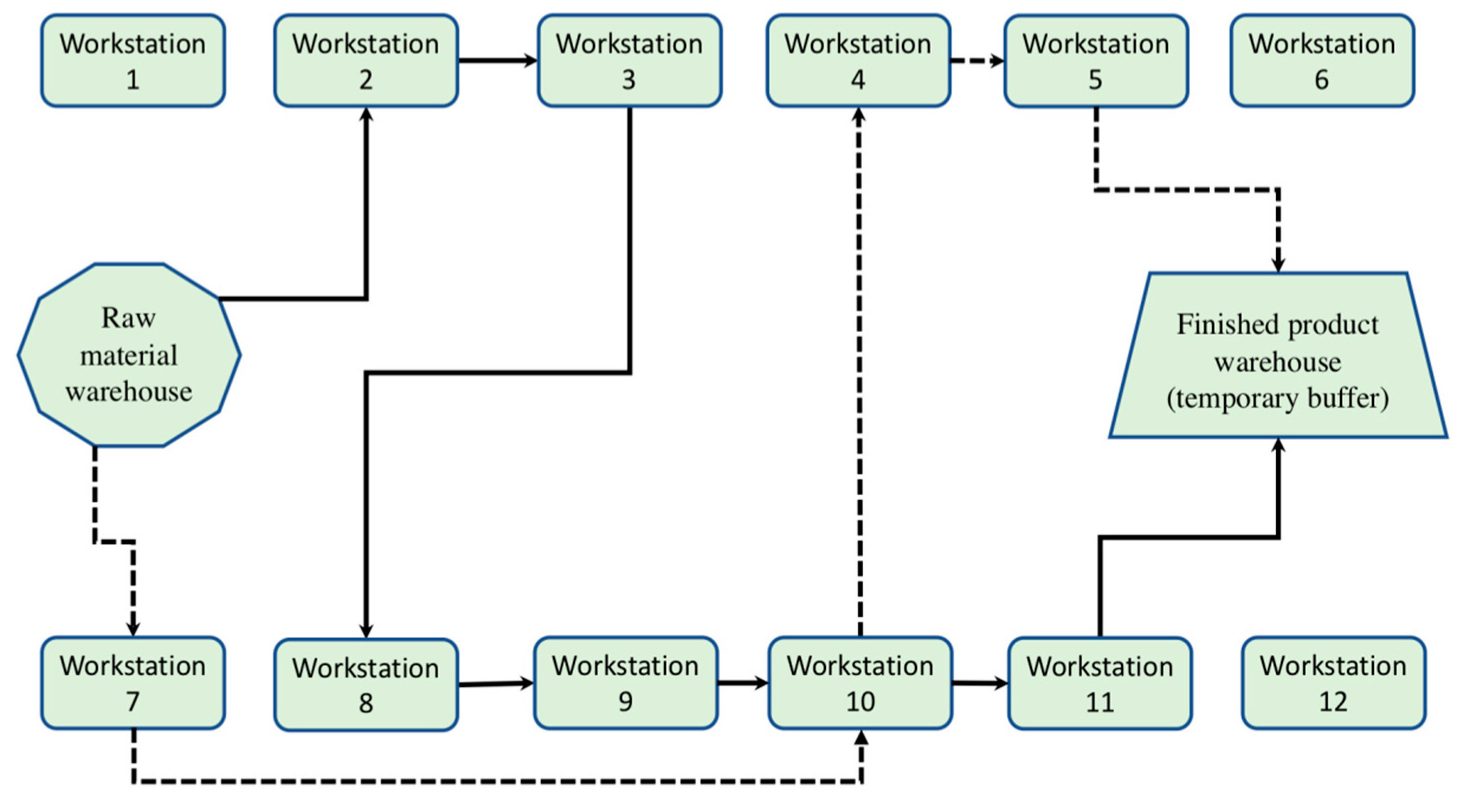 Fig.1 Two typical trajectories in a process manufacturing system. (Pérez-Lechuga G, et al., 2021)
SysMathx provides manufacturing solutions based on advanced mathematical analysis and mathematical modeling, covering production system simulation, material processing simulation, structural dynamics analysis, and complex system optimization.
Production System Modeling and Simulation
Production systems typically involve multiple manufacturing stages, numerous machines, and complex material flow interactions. Through mathematical modeling and mathematical simulation, we help manufacturing enterprises analyze and optimize production processes, identify bottlenecks, and improve resource utilization efficiency.
| Solutions | Description |
|---|---|
| Complex Production Line Modeling | Production workflows are transformed into computable mathematical models describing material flow, equipment states, and timing relationships between manufacturing processes, providing the foundation for simulation and optimization. |
| Production Process Simulation and Optimization | Discrete-event simulation and continuous-process simulation methods are applied to analyze production bottlenecks, equipment utilization, and work-in-progress inventory, enabling optimization of scheduling strategies and production line layouts. |
| Hybrid Simulation of Discrete and Continuous Processes | Support is provided for manufacturing systems containing both discrete operations, such as assembly and machining, and continuous processes, such as chemical reactions and heat treatment operations. |
Mathematical Analysis for Material Processing and Chemical Engineering
Material processing operations involve highly coupled mechanical, thermal, and fluid dynamic behaviors. Mathematical analysis methods are applied to simulate these processes, helping optimize process parameters and predict material state evolution during manufacturing operations, where our methods provide accurate computational representation and predictive capability for complex manufacturing conditions.
| Solutions | Description |
|---|---|
| Material Mechanical Behavior Simulation | Stress distribution, strain evolution, plastic deformation, and fracture behavior during manufacturing processes are analyzed to support process parameter selection and mold design optimization. |
| Heat Transfer and Phase Transition Analysis | Temperature field distribution, thermal stress evolution, melting, solidification, and phase transformation processes are simulated to optimize heating and cooling operations. |
| Coupled Fluid Flow | Coupled behavior involving fluid flow, mass transfer, heat transfer, and chemical reactions within reactors and pipelines is analyzed to optimize mixer design and operational conditions. |
Mechanical Structure Analysis and Dynamic Optimization
The strength, stiffness, and vibration characteristics of mechanical structures directly influence product reliability and operational lifespan. Through finite element analysis and modal analysis techniques, we evaluate structural performance and guide engineering design improvements.
| Solutions | Description |
|---|---|
| Structural Strength and Stiffness Analysis | Finite element methods are used to calculate stress distribution and structural deformation under static and dynamic loading conditions, helping identify stress concentration regions and potential failure locations. |
| Vibration Characteristics and Modal Analysis | Natural frequencies, mode shapes, and damping characteristics of mechanical structures are analyzed to evaluate dynamic response behavior and identify resonance risks and structural weaknesses. |
| Structural Optimization and Design Modification | Based on modal and strength analysis results, structural parameters and engineering designs are optimized to improve product performance and operational reliability. |
Uncertainty Handling and Complex System Optimization
Real manufacturing processes contain significant uncertainties, including material property variations, process condition deviations, and environmental fluctuations. Through uncertainty quantification and robust optimization methods, we help enterprises make reliable decisions under uncertain operating conditions.
| Solutions | Description |
|---|---|
| Nonlinear Expectation and Uncertainty Quantification | The effects of parameter variability, material heterogeneity, and measurement uncertainty on product quality and process stability are quantitatively analyzed. |
| Complex Industrial System Performance Prediction | Mathematical models are established for complex systems involving soft materials, condensed matter physics, and composite materials to predict system performance and behavior. |
| Robust Optimization and Reliability Analysis | Process parameters are optimized under uncertainty conditions to ensure stable product quality and reduce quality variation throughout manufacturing operations. |
Our Methods for Solving Manufacturing Challenges
SysMathx combines advanced mathematical analysis, experimental modal analysis, and uncertainty theory to provide manufacturing enterprises with a complete technical pathway from physical modeling to simulation-driven optimization. Our methodology focuses not only on computational accuracy, but also on alignment with practical production conditions and engineering applicability.
Application Scenarios for Manufacturing Solutions
SysMathx's advanced mathematical analysis and manufacturing solutions are applied across production system optimization, material processing, structural design, and quality control, helping manufacturing enterprises improve efficiency, reduce costs, and enhance product reliability.
Automotive Component Manufacturing
Our manufacturing solutions support automotive component development through structural analysis and production optimization for lightweight and reliable engineering systems. Finite element analysis and production simulation help improve structural performance, optimize assembly efficiency, and reduce physical prototype testing.
Aerospace Structural Component Processing
Our manufacturing solutions for aerospace structural components support thermo-mechanical analysis, machining optimization, and vibration evaluation for complex geometries and difficult-to-machine materials. Mathematical simulation and modal analysis help optimize cutting parameters, predict machining chatter, and enhance manufacturing efficiency.
Semiconductor Manufacturing
Our manufacturing solutions for electronic packaging and semiconductor manufacturing support thermal-mechanical analysis and process optimization for multi-material systems with reliability constraints. Mathematical simulation and uncertainty quantification are used to evaluate temperature distribution and process control accuracy.
Chemical and Material Processing Industries
Our manufacturing solutions support chemical and material processing through multi-physics simulation and process optimization of complex fluid, thermal, and reaction systems. Mathematical simulation helps analyze flow behavior, optimize process conditions, and improve reactor and molding performance.
Heavy Machinery and Equipment Manufacturing
Large-scale equipment engineering is supported by our manufacturing solutions through structural analysis, vibration assessment, and reliability evaluation under complex loading conditions. Finite element and modal analysis help identify failure risks, characterize dynamic behavior, and improve maintenance and design decisions.
Precision Manufacturing and Quality Control
High-precision production systems are enhanced by our manufacturing solutions through accuracy modeling, process optimization, and quality control analysis for strict manufacturing requirements. Mathematical and statistical modeling methods help optimize machining parameters and improve process stability and product quality.
Advantages of Our Manufacturing Solutions
- Theory–Engineering Connection: Our methods directly solve real manufacturing problems, linking mathematical theory with practical engineering solutions.
- Multi-Scale Modeling: We support modeling from material-level behavior to production systems and process optimization.
- Modal Analysis Integration: We combine experimental modal analysis with simulation to improve structural dynamic evaluation and design.
- Uncertainty & Nonlinearity Handling: Our approach analyzes complex uncertainty and nonlinear interactions for more reliable predictions.
- Usable Model Delivery: We deliver well-documented models and code that can be directly used, modified, and extended by engineers.
- Engineering-Oriented Design: Our solutions are tailored to real manufacturing conditions to ensure practical applicability.
Start Your Manufacturing Optimization Project!
Whether your challenge involves production process simulation, process parameter optimization, structural dynamics analysis, or complex system performance prediction, SysMathx provides manufacturing solutions powered by advanced mathematical analysis.
We help manufacturing enterprises transform physical problems into computable mathematical models and improve product quality, shorten production cycles, and reduce development costs through mathematical simulation and optimization methods. Contact us to discuss your manufacturing challenges and analytical requirements.
FAQs
What practical manufacturing problems can advanced mathematical analysis solve?
Advanced mathematical analysis can be applied to structural strength analysis, process parameter optimization, production bottleneck identification, vibration diagnosis, and quality variation analysis. By transforming physical processes into computable mathematical models, manufacturers can reduce physical testing requirements, shorten development cycles, and improve product reliability.
What data is required to begin the analysis?
Typical requirements include product geometry models, material property parameters such as elastic modulus, thermal conductivity, and density, process conditions including temperature, pressure, and velocity, as well as available experimental or production data for model calibration. More complete datasets generally improve model accuracy and predictive reliability.
How accurate are mathematical simulation results?
Simulation accuracy depends on the validity of mathematical assumptions, the quality of material property data, and the accuracy of boundary condition definitions. We validate models through comparisons with experimental measurements or analytical solutions and clearly communicate error ranges and applicable conditions in the final results.
Can you help modify product designs?
Yes. We can provide engineering recommendations based on simulation and analysis results, including structural modifications, material substitutions, and process parameter optimization strategies. Final engineering decisions remain dependent on the client’s production requirements and cost considerations.
Can the simulation models continue to be used internally after project delivery?
Yes. Delivered models and computational codes include complete usage documentation and comments, allowing your engineering teams to independently run, modify, and extend the models without requiring continuous external support.
How do you handle uncertainty in manufacturing processes?
Uncertainty quantification methods such as Monte Carlo simulation and polynomial chaos expansion are applied to evaluate the influence of material variation, process deviations, and operational uncertainty on product quality. These approaches provide statistically meaningful prediction intervals and support robust process design and tolerance allocation.
Reference
- Pérez-Lechuga G, et al. Mathematical modeling of manufacturing lines with distribution by process: A Markov chain approach. Mathematics. 2021, 9(24): 3269.