
Differential Equation Modeling Services
SysMathx offers professional, efficient, and customized differential equation modeling services to engineering and scientific research clients worldwide. Drawing on strong theoretical foundations and extensive cross-disciplinary engineering experience, we support universities, research institutions, and industry clients across the full project lifecycle—from problem formulation and algorithm design to code implementation and result validation. Our services extend beyond conventional simulation to include model-driven optimization, control strategy development, digital twin construction, and real-time predictive applications.
What Is Differential Equation Modeling and How It Works
Differential equation modeling is basically a way to describe how a system changes — both over time and across space. You see it a lot in physics and engineering. Things like motion, heat moving through a material, or fluid flowing through a pipe — you can turn these into differential equation models and then simulate them.
In practice, people usually split this into two types:
- ODE models – when you don't care about spatial differences, just how things change over time.
- PDE models – when the spatial part matters. For example, how temperature varies across a room, how flow swirls around an object, or how electromagnetic fields behave.
What's different from pure data-driven methods? With differential equations, you're not just curve-fitting. You're building the model from actual physical principles. That makes it more robust when you don’t have a ton of data, or when conditions change. Plus, it gives you real insight — you can see how each parameter affects the system, which helps engineers make smarter decisions.
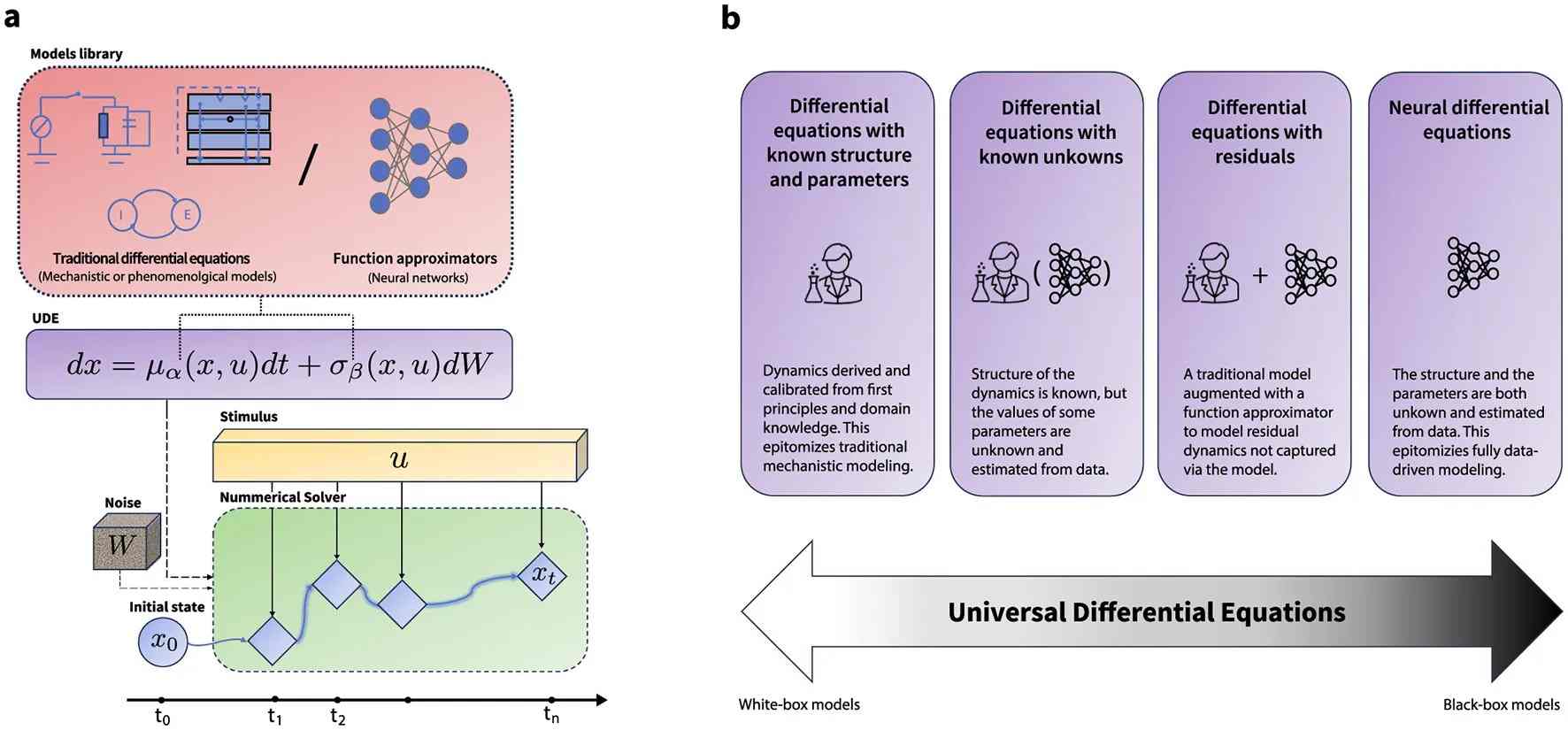 Fig.1 Universal differential equations. (El-Gazzar A, et al., 2025)
SysMathx provides end-to-end solutions tailored to your specific physical problem, from equation construction and numerical solution to result validation. We translate your engineering language into rigorous mathematical models and deliver a runnable, maintainable, and trustworthy computational tool. Our focus is on methodological rigor, result credibility, and process transparency.
- Lumped-Parameter System Modeling Services
For systems where physical quantities can be considered uniform in space, we use ordinary differential equations (ODEs). These systems typically involve a set of state variables evolving over time. The idea is to capture the main dynamic behavior while keeping the model simple enough to work with.
| Items | Capabilities | Deliverables |
|---|---|---|
| Model Development | Build ODE systems from physics laws (mechanics, circuits, kinetics) |
|
| Numerical Solvers | Adaptive methods for stiff, nonlinear, and large-scale systems | |
| Parameter Estimation | Data-driven calibration and optimization | |
| System Analysis | Sensitivity, stability, and phase-space insights |
- Distributed-Parameter System Modeling Services
When spatial distribution matters—temperature fields, stress fields, fluid flow, electromagnetic fields—we work with partial differential equations (PDEs). These models capture how things vary across space and time. The challenge is to discretize the continuous fields without losing accuracy or blowing up computation time.
| Items | Capabilities | Deliverables |
|---|---|---|
| Equation Formulation | Heat transfer, fluid flow, structural, electromagnetic models |
|
| Discretization Methods | FEM, FVM, FDM, spectral methods | |
| Transient & Nonlinear Solving | Stable and efficient time integration | |
| HPC Acceleration | Parallel computing for large-scale simulations |
- Professional Toolchains & Custom Development
SysMathx offers flexible toolchain options and custom development so our models fit seamlessly into your existing workflows. We pay attention to maintainability, scalability, and integration with real-world systems.
| Capabilities | Deliverables |
|---|---|
| API-based automation & batch simulation HPC deployment & optimization Integration with digital twin & IoT systems Reduced-order models for real-time use |
|
Applications of Our Differential Equation Modeling Services
Differential equation modeling spans nearly all engineering and scientific disciplines, helping clients translate physical insights into quantifiable predictive capabilities. Our services play a crucial role in the following typical scenarios:
Environmental and Earth Sciences
Groundwater flow and transport—PDEs track pollutant movement and support remediation. In air quality work, pollutant dispersion is modeled under real weather conditions. For climate and ocean studies, fluid dynamics is used to analyze circulation, heat transfer, and trends.
Electronics and Electrical Engineering
Differential equations are used for circuit transients, including RLC circuits, op-amps, and switching supplies to assess response and stability. For motors and power systems, Maxwell equations and system models evaluate fields, torque, losses, stability, and EMC performance.
Mechanical & Aerospace Engineering
Structural vibration and modal analysis use elasticity theory to determine natural frequencies, mode shapes, and response. Rotor dynamics models assess critical speeds, unbalance, and stability, while multi-body dynamics with ODEs analyze motion, joint forces, and power flow.
Energy and Power Engineering
Heat exchanger and combustion models couple heat/convection or kinetics with fluid dynamics to predict temperature and pollutants. Battery models integrate electrochemical, thermal, fluid effects; wind turbine models combine aeroelasticity, drivetrain, generators for response and control.
Biomedical Engineering
In hemodynamics, blood flow is simulated to analyze wall shear stress, pressure, and thrombosis risk. Bioheat equations model tissue temperature for thermal therapies, while neuronal models study electrophysiological behavior and transmission.
Materials Science and Manufacturing
In additive manufacturing, coupled thermo-mechanical PDEs and phase-field methods predict deformation and optimize microstructure design. For injection molding, integrated fluid mechanics and heat conduction simulate the processing cycle to minimize warpage and shrinkage.
Why Choose Us?
- Expert Team – Proven experience in modeling, numerical methods, and validation.
- Rigorous Approach – Verified models with tested algorithms and benchmark checks.
- Clear Confidence – Error bounds and intervals for transparent results.
- Uncertainty Analysis – Quantify input variability and model limitations.
- Risk Control – Identify potential issues early through sensitivity analysis.
Start Your Project!
Have a complex engineering or scientific problem? We turn physical systems into accurate differential equation models for simulation, validation, and analysis. Contact us with a brief description of your project, and our technical team will follow up to discuss your goals and next steps.
FAQs
What types of problems can differential equation modeling solve?
It is used for systems involving dynamics and physical laws, such as heat transfer, fluid flow, structural behavior, and multiphysics simulations.
How do you ensure the accuracy of the model?
Models are validated using benchmark tests, numerical verification methods, and error analysis to ensure reliable and consistent results.
Can existing experimental or simulation data be integrated into the model?
Yes, available data can be used for parameter estimation, calibration, and validation to improve model accuracy and predictive performance.
Reference
- El-Gazzar A, et al. Universal differential equations as a unifying modeling language for neuroscience. Frontiers in Computational Neuroscience. 2025, 19: 1677930.