
Petri Net Modeling Services
Modern systems often involve concurrency, shared resources, and event-driven behaviors that are difficult to manage with traditional methods, leading to inefficiencies and instability if not properly analyzed. SysMathx provides petri net modeling services to represent and analyze such discrete-event systems using structured, formal approaches. We convert complex processes into simulation-ready models to support understanding, verification, and optimization.
Why Petri Net Modeling Matters for Your System
Petri net modeling helps you understand and analyze complex systems with concurrency, synchronization, and resource constraints, where traditional approaches are often insufficient. It provides a formal and visual framework to reveal system structure and dynamic behavior for better system insight. This supports more reliable design, validation, and decision-making.
- Petri nets give a clear and formal way to describe concurrent processes. The result is better system visibility and control.
- Deadlocks, conflicts, and inefficiencies are detectable early, before implementation. That improves system reliability and validation.
- Modeling results reveal bottlenecks and help optimize system design as well as operational strategies.
- The approach scales to complex applications, including large‑scale systems with multiple interacting components and dynamic behaviors.
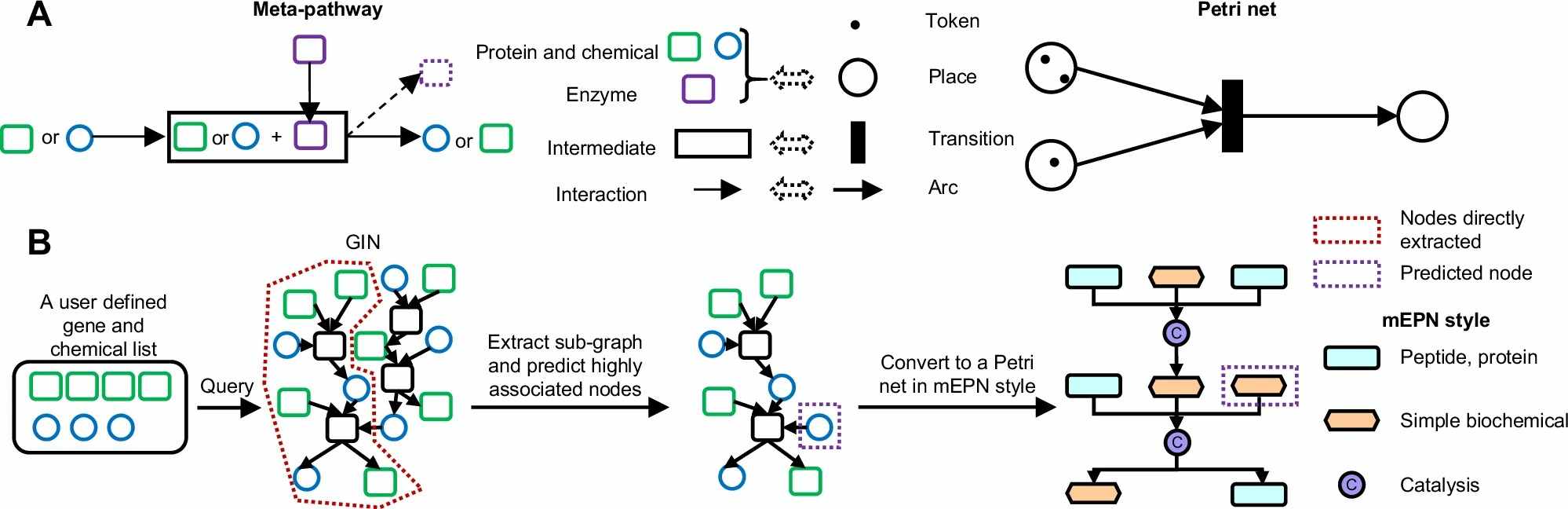 Fig. 1 The strategies to construct Petri net models from GIN. (Lin X, et al., 2024)
SysMathx delivers comprehensive petri net modeling services to support the analysis, design, and optimization of complex discrete-event systems. System logic is transformed into formal petri net representations that capture concurrency, synchronization, and resource constraints in a mathematically consistent way. The focus is on providing structured, simulation-ready models that support system understanding, verification, and performance improvement.
System Modeling and Structure Representation Services
Our petri net modeling is used to build formal representations of system structure, event relationships, and concurrent processes. We transform complex system logic into a clear and analyzable mathematical framework for structured evaluation. This approach enables our services to support both qualitative understanding and quantitative analysis of complex systems.
- System structure modeling with formal petri net representation
- Event and transition logic mapping for system processes
- Modeling of concurrent and interacting system components
- Construction of analyzable and simulation-ready system structures
Simulation and System Analysis Services
Our petri net models are used to simulate discrete-event system behavior under different operational conditions and workloads. We analyze system dynamics, performance variations, and event-driven responses in a structured manner. This enables our services to support evaluation and understanding of system behavior before real-world implementation.
- Discrete-event system simulation under varying scenarios
- Dynamic behavior analysis of system evolution over time
- Performance evaluation including throughput and delay behavior
- Scenario-based testing for system response assessment
Resource and Constraint Analysis Services
Our petri net modeling is used to represent how resources are shared, allocated, and constrained within complex systems. We analyze system structures to identify inefficiencies, conflicts, and congestion points in operational processes. This enables our services to support system improvement and effective operational optimization.
- Resource allocation and utilization modeling
- Constraint and conflict relationship analysis
- Bottleneck and congestion identification
- Efficiency evaluation and optimization support
System Verification and Reliability Modeling Services
Our system verification and reliability modeling services use petri net models to formally evaluate whether system logic is correct, consistent, and free of structural issues. We enable early identification of potential risks such as deadlocks or invalid state transitions through structured analysis. This allows our services to improve system reliability before deployment.
- Deadlock detection and prevention analysis
- Reachability and state space analysis
- Liveness and safety property verification
- Logical consistency and structural validation
Petri Net Modeling Foundations and Capabilities
SysMathx provides petri net modeling capabilities that support the analysis and representation of complex discrete-event systems involving concurrency, synchronization, and resource constraints. These capabilities form the technical foundation for building structured, analyzable, and simulation-ready petri net models used across system design, evaluation, and optimization tasks.
- Formal representation of system states and transitions
- Modeling of concurrent and interacting processes
- Mapping of event-driven system logic
- Construction of structured Petri Net architectures
- Representation of complex process dependencies
- Modeling of discrete-event system dynamics
- Simulation of event-triggered system evolution
- Representation of time-dependent behavior changes
- Scenario-based system behavior analysis
- Reconstruction of operational system trajectories
- Modeling of resource allocation and usage
- Representation of synchronization and conflicts
- Identification of system bottlenecks and congestion points
- Constraint-driven system behavior modeling
- Analysis of resource dependency structures
- Deadlock detection and analysis
- Reachability and state-space exploration
- Liveness and safety property evaluation
- Structural consistency verification
- Formal system correctness assessment
- Performance behavior analysis of discrete-event systems
- Throughput and delay evaluation
- System efficiency assessment
- Comparative scenario analysis
- Operational behavior characterization
- Integration of multi-component system dynamics
- Representation of cross-system interactions
- Modeling of coupled operational subsystems
- Unified discrete-event system abstraction
- Scalable modeling of complex system architectures
Applications of Petri Net Modeling Services
Manufacturing and Production Systems
Our petri net modeling services are used to analyze production lines, assembly processes, and automated manufacturing systems with parallel operations and shared resources. This enables us to identify bottlenecks, improve coordination, and support efficient production system optimization.
Workflow and Business Process Systems
In workflow and business process systems, we apply petri net modeling to represent task dependencies, process synchronization, and decision logic in complex organizational environments. This enables us to analyze process efficiency and support structured workflow optimization and performance improvement.
Communication and Network Systems
In communication and network systems, we apply petri net modeling to represent communication protocols, message passing, and synchronized operations in distributed environments. This enables us to analyze system reliability, concurrency behavior, and performance under varying network conditions.
Transportation and Infrastructure Systems
In transportation and infrastructure systems, we apply petri net modeling to represent flow dynamics, congestion behavior, and coordination between system components. This enables us to analyze efficiency, identify bottlenecks, and support improved planning and management of transportation networks.
Automated &Event-Driven Control Systems
In automated and event-driven control systems, we apply petri net modeling to represent event-triggered behavior, feedback loops, and real-time decision logic. This enables us to analyze system stability, responsiveness, and correctness under dynamic operating conditions.
Logistics and Supply Chain Systems
In logistics and supply chain systems, we apply petri net modeling to represent material flow, resource allocation, and coordination across distributed processes. This enables us to analyze system efficiency, manage operational constraints, and improve supply chain performance under varying demand conditions.
Advantages of Petri Net Modeling Services
- Provide a formal and structured way to represent complex discrete-event systems with concurrency and synchronization.
- Enable early detection of system issues such as deadlocks, conflicts, and inefficiencies before implementation.
- Support clear visualization of system logic, improving understanding of process interactions and dependencies.
- Allow simulation-based analysis to evaluate system behavior under different operational scenarios.
- Deliver scalable modeling approaches suitable for both small processes and large complex systems.
- Improve system reliability and decision-making by providing mathematically consistent and analyzable models.
Start Your Petri Net Modeling Project!
Ready to turn complex event-driven systems into clear, analyzable, and optimization-ready models? SysMathx provides professional petri net modeling services to help you understand system behavior, improve performance, and ensure reliable design. Contact us today to discuss your project and receive a tailored modeling solution.
FAQs
What types of systems are suitable for Petri Net modeling?
Petri Net modeling is suitable for a wide range of discrete-event systems involving concurrency, synchronization, and resource constraints, including manufacturing systems, workflow processes, communication networks, and logistics operations where interactions between components are complex and event-driven.
Is complete data required to start a Petri Net modeling project?
A Petri Net modeling project can begin with system descriptions, process logic, or partial data, as models can be progressively refined and enhanced as more detailed information becomes available. This flexibility allows modeling to start early in the design or analysis phase.
Can Petri Net models be used for simulation and performance analysis?
Petri Net models are typically developed as simulation-ready frameworks that allow evaluation of system behavior, performance metrics, and dynamic responses under different operational scenarios.
What problems can Petri Net modeling help identify?
Petri Net modeling helps identify structural and operational issues such as deadlocks, bottlenecks, resource conflicts, inefficiencies, and logical inconsistencies that may impact system performance and reliability.
How does Petri Net modeling support system optimization?
By providing a formal and analyzable representation of system behavior and constraints, Petri Net modeling enables systematic exploration of different configurations to identify improved designs and operational strategies.
Is Petri Net modeling scalable for large and complex systems?
Petri Net modeling can be structured and extended to represent large-scale systems with multiple interacting components, making it suitable for analyzing complex and high-dimensional discrete-event environments.
Reference
- Lin X, et al. Automatic construction of Petri net models for computational simulations of molecular interaction network. npj Systems Biology and Applications. 2024, 10(1): 131.